Listen to the sound of structural failure. That high pitched snap is not just a snack; it is the definitive roar of the shatter point. We are moving beyond the flaccid, oily strips of diner breakfasts and into the realm of architectural lipid extraction. When you master the art of Crispy Bacon Bits, you are not merely cooking meat; you are performing a controlled thermal reduction of porcine tissue. The goal is a total moisture evacuation that leaves behind a lattice of protein and rendered fat so brittle it vibrates. We want a crunch that resonates through the jawbone. This is about the transformation of soft belly fat into a salty, umami-dense gravel that upgrades everything from a velvet pomme puree to a sharp wedge salad. We are auditing the very infrastructure of cured pork to ensure that every morsel provides a maximum sensory payload. Forget the frying pan splatter and the uneven chew. We are aiming for a uniform, golden-brown perfection that defies the laws of standard home cookery.
THE DATA MATRIX
| Metric | Specification |
|---|---|
| Prep Time | 10 Minutes |
| Execution Time | 25 Minutes |
| Yield | 350g / 1.5 Cups |
| Complexity (1-10) | 3 |
| Estimated Cost per Serving | $0.85 USD |
THE GATHERS
Ingredient Protocol:
- 450g / 1 lb Thick-cut smoked bacon (center-cut preferred)
- 60ml / 0.25 cup Cold filtered water
- 2g / 0.5 tsp Freshly cracked black pepper
- 1g / 0.25 tsp Smoked paprika (optional for depth)
Section A: Ingredient Quality Audit:
The primary failure point in lipid extraction is starting with "pumped" bacon. Many commercial brands inject a brine solution to increase weight; this excess moisture leads to steaming rather than searing. If your bacon looks translucent or overly wet in the package, it will likely fail the shatter test. To fix this, lay the slices on a wire rack over a sheet tray and refrigerate uncovered for two hours to aerate and dry the surface. Additionally, ensure your bacon is cold when you begin the dicing process. Warm fat is viscous and slippery, making precision cuts impossible. If the fat begins to smear, return the protein to the freezer for ten minutes to restore structural integrity.
THE MASTERCLASS
1. Precision Geometry and Cold Start
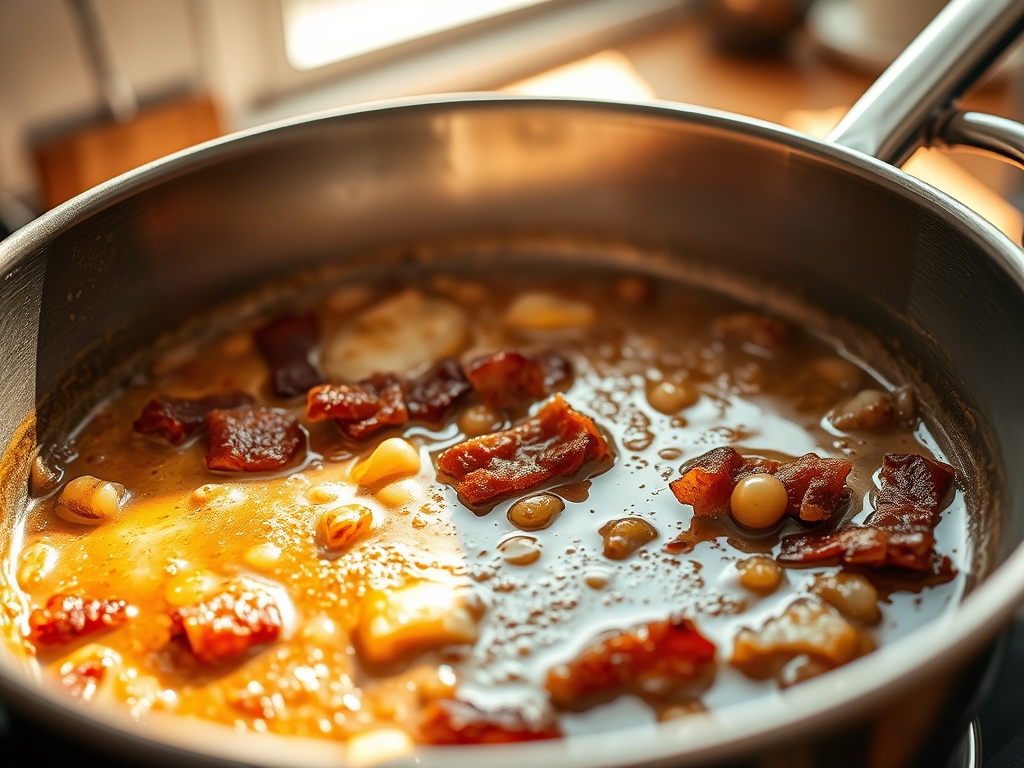
Begin by stacking your chilled bacon slices. Use a sharp chef knife or a heavy-duty bench scraper to dice the strips into uniform 1/4-inch cubes. Place these cubes into a cold stainless steel saucier or a heavy-bottomed skillet. Do not preheat the pan. Adding cold fat to a hot pan causes the exterior to seize and burn before the internal lipids can render out.
Pro Tip: Uniformity is the soul of the shatter point. Using a digital scale to ensure your batches are consistent in weight allows for predictable heat distribution across the entire surface area of the pan.
2. The Hydro-Thermal Buffer
Add the cold water to the pan. This seems counter-intuitive for achieving crispiness, but the water acts as a thermal regulator. It keeps the temperature at a constant 212 degrees Fahrenheit (100 Celsius) while the fat begins to melt. This prevents the protein from toughening or scorching while the rendering process initiates.
Pro Tip: The water allows the fat to infuse with any added spices, like black pepper, without burning them. As the water evaporates, the temperature will naturally rise to the Maillard zone.
3. Controlled Lipid Extraction
Set the heat to medium-low. As the water boils off, the bacon will begin to fry in its own rendered fat. Use a heat-resistant spatula to move the bits constantly. You are looking for the fat to turn from a solid white to a clear, bubbling liquid. This is the stage where the moisture within the cellular structure of the pork is replaced by hot oil.
Pro Tip: Monitoring the bubble size is key. Large, violent bubbles indicate steam (water) escaping. Small, tight bubbles indicate the fat is doing the heavy lifting.
4. The Golden Hour and Filtration
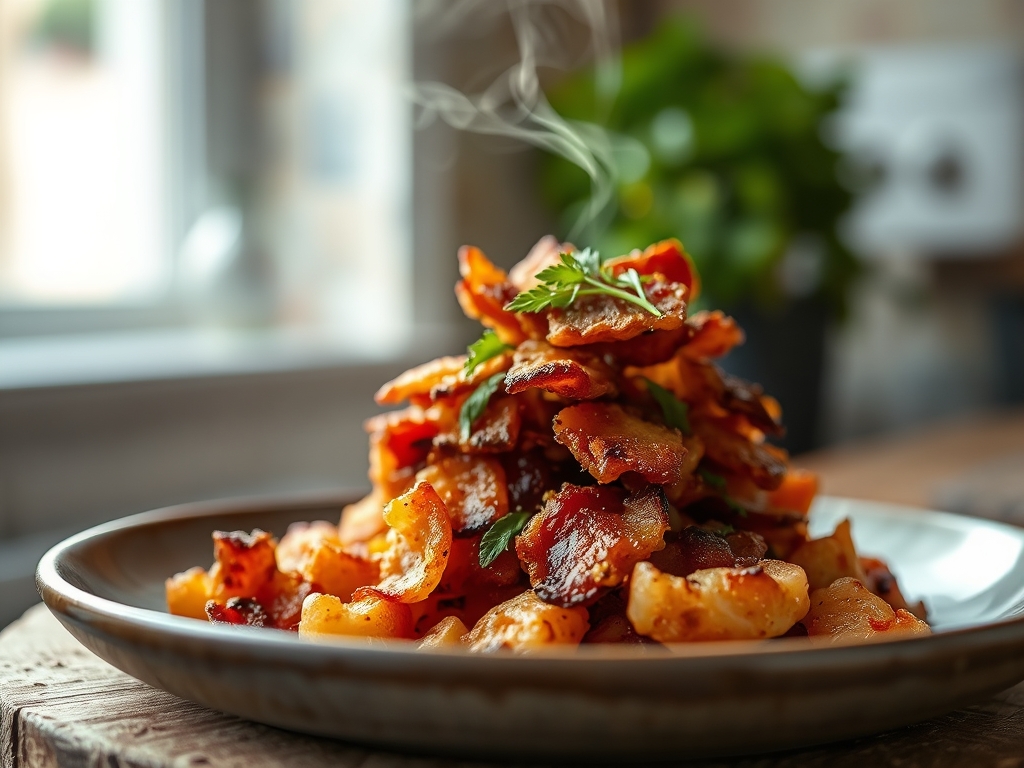
Once the bits have reached a deep mahogany color, as seen in the reference photo, they are nearing the shatter point. The foam in the pan will increase significantly as the last of the moisture departs. Immediately remove the pan from the heat. Use a fine-mesh strainer to separate the Crispy Bacon Bits from the liquid gold (rendered lard).
Pro Tip: Residual heat is a silent killer. Even after removing the pan from the burner, the thermal mass of the fat will continue to cook the meat. Use your bench scraper to quickly move the bits onto a paper-towel-lined tray to stop the process.
Section B: Prep & Timing Fault-Lines:
The most common human error is impatience. Increasing the heat to "High" to speed up the process results in acrid, bitter bits that are burnt on the outside and chewy in the center. If you notice the fat smoking, you have exceeded the smoke point; immediately add a splash of room temperature oil to lower the temperature and save the batch. Timing is also critical during the final thirty seconds. The transition from "perfectly crisp" to "carbonized" happens in a heartbeat.
THE VISUAL SPECTRUM
Section C: Thermal & Visual Troubleshooting:
Referencing the Masterclass photo, your bits should exhibit a matte, textured surface with no visible "white" fat remaining. If your bits look dull or grey, you likely overcrowded the pan, causing the meat to steam in its own juices rather than fry. To fix this, work in smaller batches. If the browning is uneven, with some bits dark and others pale, your knife work was inconsistent. Use a ruler if necessary next time to ensure 1/4-inch precision. If the bits are "leathery" rather than "shattery," you pulled them too early. They must reach that deep reddish-brown hue to ensure the protein strands have fully dehydrated and hardened.
THE DEEP DIVE
Macro Nutrition Profile:
Per 15g serving (approximately 1 tablespoon), expect 70-90 calories. The profile is dominated by lipids (6g) and protein (5g), with near-zero carbohydrates. While high in sodium, the intense flavor profile means a small amount provides a significant sensory impact.
Dietary Swaps:
For a Keto-friendly approach, this recipe is already optimized. For a Vegan alternative, use diced shiitake mushrooms tossed in liquid smoke and soy sauce, following the same "low and slow" rendering method in olive oil. For a Gluten-Free guarantee, ensure your bacon brand does not use malt-based flavorings or cross-contaminated smoke houses.
Meal Prep & Reheating Science:
To maintain the molecular structure, store bits in an airtight glass container with a silica packet if available. Do not microwave to reheat; the localized agitation of water molecules will turn the bits rubbery. Instead, flash-fry them in a dry pan for 60 seconds or use a toaster oven at 300 degrees Fahrenheit to re-crisp the exterior.
THE KITCHEN TABLE
Why is my bacon sticking to the stainless steel?
This usually happens because the pan was too hot initially or wasn't cleaned properly. Starting with a cold pan and adding water prevents the proteins from bonding to the metal surface during the early stages of the render.
Can I save the leftover fat?
Absolutely. Filter it through a coffee filter while warm. This liquid gold is shelf-stable in the fridge for months. Use it to deglaze pans or as a base for a piquant warm vinaigrette.
How do I get that specific "shatter" texture?
The secret is the water start. It ensures the fat renders out completely before the protein gets too hard. This creates a porous, honeycomb-like structure in the meat that snaps perfectly when bitten.
My bacon bits are salty. How do I fix it?
If the final product is too aggressive, toss the finished bits with a pinch of brown sugar while they are still warm. The sweetness provides a chemical counterbalance to the concentrated sodium without ruining the crunch.