Stop looking at your bird as a centerpiece and start viewing it as a thermodynamic challenge. We are not just roasting a carcass; we are managing a complex moisture barrier to achieve the ultimate prize: Crispy Turkey Skin. If your previous holiday attempts resulted in a texture resembling wet parchment paper, you have failed the structural integrity test. The secret to a legendary roast lies in the aggressive management of surface moisture and the calculated application of heat to render subcutaneous fat. We are hunting for that glass-like shatter, that golden-hued armor that protects the succulent, saline-perfumed meat beneath. This is a high-stakes engineering project involving protein denaturation and the Maillard reaction. Every gram of water left on that skin is an enemy of progress. We need to desiccate the exterior while maintaining a pressurized environment of juice within the muscle fibers. Put down the baster; basting is the enemy of the crunch. We are here to build a barrier, not a sponge. Let us begin the audit.
THE DATA MATRIX
| Metric | Specification |
|---|---|
| Prep Time | 24 to 72 Hours (Dry Brine Phase) |
| Execution Time | 3 to 4 Hours (Thermal Application) |
| Yield | 10 to 14 Servings |
| Complexity | 7/10 (Requires Precision Timing) |
| Estimated Cost per Serving | $4.50 to $6.00 USD |
THE GATHERS
Ingredient Protocol:
- 1 Whole Heritage Turkey; 5.4kg to 6.3kg / 12 to 14 lbs
- Kosher Salt; 60g / 4 tbsp
- Unsalted High-Fat Butter; 225g / 1 cup
- Fresh Thyme and Rosemary; 15g / 0.5 oz
- Smoked Paprika; 5g / 1 tsp
- Black Peppercorns; 10g / 2 tsp
- Dry White Wine; 240ml / 1 cup
- Turkey or Chicken Stock; 480ml / 2 cups
Section A: Ingredient Quality Audit:
The most common failure point is the "Self-Basting" bird found in the frozen aisle. These specimens are injected with a viscous saline solution that wreaks havoc on your moisture barrier. If you are forced to use one, reduce your added salt by 50 percent to avoid a sodium spike. Another failure is using standard table salt. Its fine grain dissolves too quickly and lacks the jagged surface area needed to draw out moisture effectively. Always opt for Diamond Crystal or Morton Kosher salt. If your herbs look wilted, they have lost their volatile oils. Infuse them into your butter at a low temperature to extract what little flavor remains before applying it to the bird.
THE MASTERCLASS
1. The Desiccation Protocol
The journey to Crispy Turkey Skin begins 48 hours before the oven is even preheated. Use a digital scale to measure your salt precisely. Pat the bird dry with lint-free towels until the surface is tacky. Rub the salt over every square inch, including the cavity. Place the turkey on a wire rack over a sheet pan and leave it uncovered in the refrigerator.
Pro Tip: This process, known as a dry brine, uses osmosis to pull moisture out of the skin and then pull the seasoned brine back into the meat. The cold air of the refrigerator acts as a dehumidifier, thinning the skin so it can render more efficiently during the roast.
2. The Lipid Infusion
Prepare your compound butter by mixing softened butter with minced herbs and paprika. Use a saucier to melt a small portion of it if the butter is too cold to work with. Carefully separate the skin from the breast meat using your fingers, being careful not to tear the membrane. Distribute the butter evenly under the skin and across the exterior.
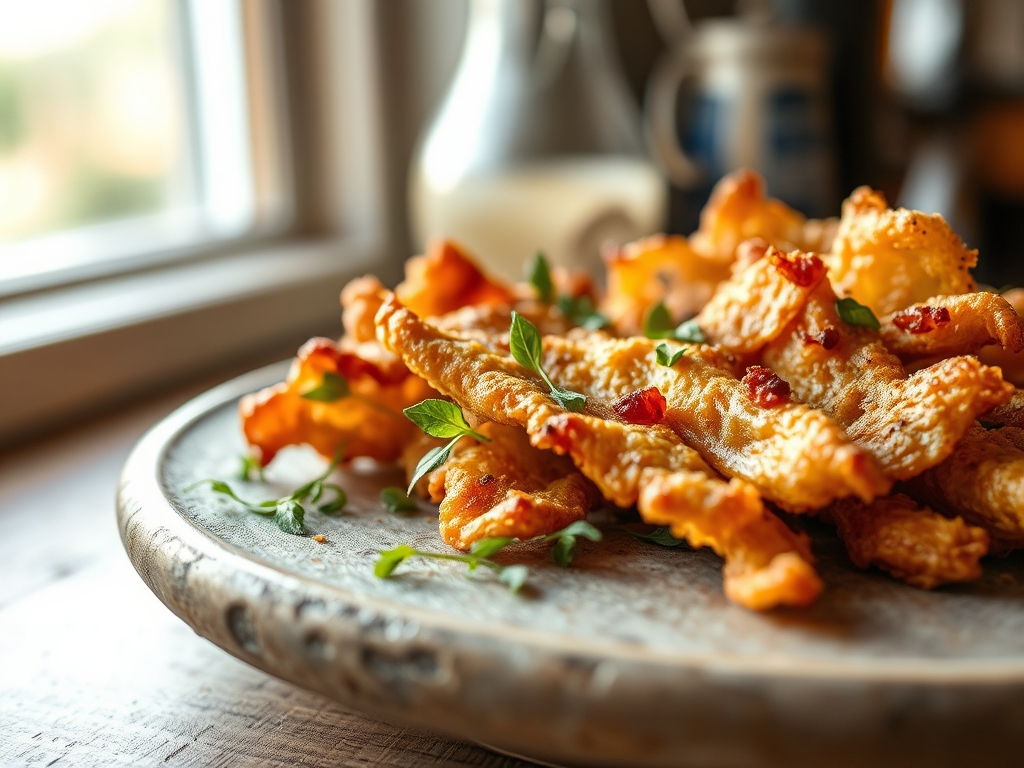
Pro Tip: Fat is a superior heat conductor compared to air. By placing lipids directly under the skin, you are essentially frying the skin from the inside out as the bird roasts. This creates the "shatter" effect seen in professional culinary photography.
3. Thermal Calibration and Blast Off
Preheat your oven to 230C / 450F. This initial high-heat blast is crucial for the Maillard reaction. Place the bird in a heavy-duty roasting pan. Roast at this temperature for 20 to 30 minutes until the skin begins to look blistered and golden.
Pro Tip: Use an infrared thermometer to check the surface temperature of the roasting pan. High initial heat triggers the rapid evaporation of any remaining surface water, preventing the "steaming" effect that leads to flaccid skin.
4. The Equilibrium Phase
Reduce the oven temperature to 160C / 325F. This allows the internal temperature to rise slowly without burning the exterior. Rotate the pan 180 degrees every hour to account for oven hot spots. Use a bench scraper to clear any charred bits from the bottom of the pan if you plan to make gravy.
Pro Tip: Maintaining a steady, lower temperature after the initial sear ensures the collagen in the connective tissues breaks down into gelatin. This results in meat that is tender and moist, providing a structural contrast to the rigid exterior.
5. The Rest and Deglaze
Once the internal temperature hits 71C / 160F in the thickest part of the thigh, remove the bird. Let it rest for at least 45 minutes uncovered. While resting, place the roasting pan over two burners. Deglaze the pan with white wine, scraping up the fond with a flat-edged wooden spoon.
Pro Tip: Never tent your turkey with foil during the rest. Tenting creates a localized steam chamber that will instantly soften your Crispy Turkey Skin. Let the bird breathe to preserve the moisture barrier you worked so hard to build.
Section B: Prep & Timing Fault-Lines:
The "Danger Zone" in turkey prep is the transition from fridge to oven. If you let the bird sit on the counter for too long to "reach room temperature," you risk bacterial bloom and condensation. Condensation is the mortal enemy of the crunch. Move the bird directly from the cold, dry fridge to the hot oven. If your timing is off and the bird finishes early, do not panic. A large turkey can hold its heat for over an hour. It is better to serve a warm bird with crispy skin than a piping hot bird with soggy skin.
THE VISUAL SPECTRUM
Section C: Thermal & Visual Troubleshooting:
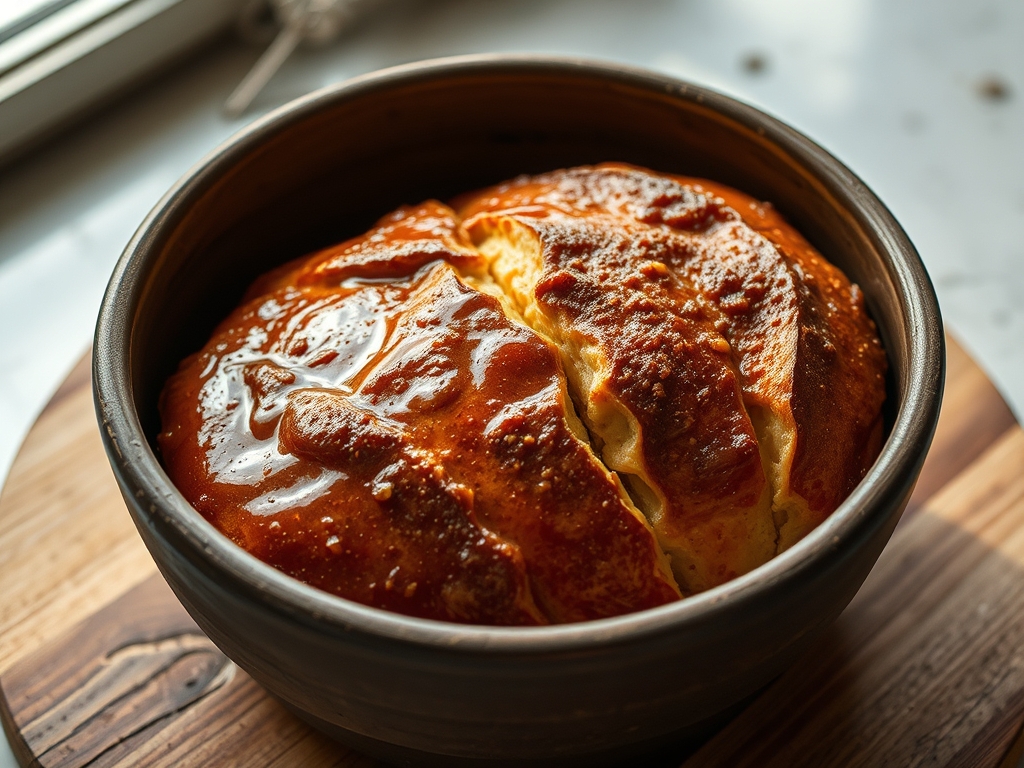
Referencing the Masterclass photo, your goal is a mahogany-toned finish with a matte-to-semi-gloss sheen. If your bird looks pale or "blond," your oven calibration is likely low; increase the heat by 10 degrees in the final 15 minutes. If you see black spots on the wing tips or drumsticks, these are "hot spots." Protect them with small "caps" of foil, but do not cover the breast. If the skin looks wrinkled rather than tight, you likely skipped the 48-hour dry brine. To fix a dull appearance, brush the skin with a small amount of warm, clarified butter five minutes before pulling it from the oven to aerate the surface lipids.
THE DEEP DIVE
Macro Nutrition Profile:
A standard 150g serving of roasted turkey with skin contains approximately 280 calories, 35g of protein, and 14g of fat. The skin accounts for the majority of the lipid content but provides the essential fat-soluble vitamins and the sensory satisfaction that prevents overeating.
Dietary Swaps:
- Vegan: This protocol is specific to poultry, but the dry-brining technique can be applied to cauliflower steaks to improve texture.
- Keto: This recipe is naturally keto-compliant. Ensure your stock is free of added sugars or cornstarch.
- GF: Use a gluten-free flour or a reduction method to thicken your gravy after you deglaze the pan.
Meal Prep & Reheating Science:
To maintain the molecular structure of the skin during reheating, avoid the microwave. The microwave excites water molecules, causing them to migrate from the meat to the skin, resulting in rubber. Instead, use an air fryer or a convection oven at 190C / 375F for 5 minutes. This re-renders the fat and restores the structural integrity of the moisture barrier.
THE KITCHEN TABLE
Why is my turkey skin rubbery?
Rubbery skin is caused by trapped moisture and unrendered fat. If the heat is too low or the skin was not dried properly before roasting, the fat cannot melt and the skin essentially boils in its own juices.
Can I use oil instead of butter?
Yes. Neutral oils like avocado oil have a higher smoke point than butter. However, butter contains milk solids that contribute to the Maillard reaction, providing a more complex flavor and a deeper golden color to your bird.
Should I brine in liquid?
Liquid brining is outdated. It adds "water weight" that dilutes the flavor of the meat and saturates the skin. For the ultimate Crispy Turkey Skin, a dry brine is the only professional choice for moisture management.
Does the size of the turkey matter?
Absolutely. Larger birds (over 16 lbs) have a lower surface-area-to-volume ratio. This makes it harder to crisp the skin without overcooking the meat. For the best results, stick to birds in the 12 to 14 lb range.