Forget everything you think you know about backyard cookouts because we are moving into the realm of high-performance atmospheric engineering. We are here to discuss the holy grail of the smoker: the Beef Brisket Bark. This is not merely a burnt crust; it is a complex, multi-layered matrix of polymerized fats, dehydrated proteins, and phenolic compounds deposited by wood smoke. When you bite into a world-class brisket, that outer layer should provide a tactile resistance followed by a salt-forward explosion of umami. Achieving this requires more than just fire. It requires a fundamental understanding of the Maillard reaction and the patience of a diamond cutter. We are looking for a surface that is dark as midnight but shimmering with rendered fat; a texture that is crisp yet yielding. If your bark is mushy, you have failed the moisture-management protocol. If it is bitter, your combustion was dirty. We are aiming for a mahogany-to-black finish that encapsulates the succulent, collagen-rich interior. Prepare your sensors for a deep-tissue audit of the most legendary surface in the culinary world.
THE DATA MATRIX
| Metric | Specification |
|---|---|
| Prep Time | 45 Minutes (Excluding Dry Brine) |
| Execution Time | 12 to 16 Hours |
| Yield | 10 to 12 Servings |
| Complexity (1-10) | 9 |
| Estimated Cost per Serving | $6.50 – $9.00 USD |
THE GATHERS
Ingredient Protocol:
- Whole Packer Beef Brisket: 5.5kg to 7kg / 12 to 15 lbs (USDA Prime or Choice).
- Coarse Kosher Salt: 60g / 4 tbsp (The primary electrolyte for protein denaturing).
- Coarse Black Pepper: 60g / 8 tbsp (16-mesh size for maximum surface area).
- Granulated Garlic: 15g / 1 tbsp (To infuse the aromatic layer).
- Distilled Water: 500ml / 2 cups (For the humidity pan).
- Apple Cider Vinegar: 250ml / 1 cup (For the spritz bottle).
- Unsalted Butter or Beef Tallow: 115g / 0.5 cups (For the final wrap phase).
Section A: Ingredient Quality Audit:
The most common failure point in the Beef Brisket Bark protocol is the use of table salt instead of coarse kosher salt. Table salt has a much higher density per volume; using it at a 1:1 ratio will result in an inedible, over-salted disaster. If you find yourself with only fine salt, reduce the volume by half and utilize a digital scale to ensure accuracy. Another critical failure is using pre-ground black pepper. Pre-ground dust lacks the volatile oils necessary to create a viscous bond with the meat. Always use a high-quality burr grinder or purchase 16-mesh "Cafe Grind" pepper. If the beef lacks sufficient intramuscular marbling, the bark will become brittle and dry. In this scenario, you must infuse the exterior with supplemental beef tallow during the midpoint of the cook to simulate the natural rendering process.
THE MASTERCLASS
Step-by-Step Execution:
1. The Aerodynamic Trim
Utilize a sharp boning knife to remove the hard "deckle" fat and trim the fat cap to a uniform 6mm thickness. A streamlined shape allows smoke to flow over the surface without turbulence, preventing "stall" zones where moisture pools.
Pro Tip: Use a bench scraper to clear your station of fat trimmings immediately. Removing excess surface fat ensures the smoke can reach the protein to initiate the render process effectively.
2. The Osmotic Pre-Treatment
Apply the salt-heavy rub at least 12 hours before cooking. This allows the salt to penetrate the muscle fibers, while the pepper and garlic remain on the surface to form the foundation of the Beef Brisket Bark.
Pro Tip: Store the meat on a wire rack over a sheet pan in the refrigerator. This allows air to aerate the bottom surface, ensuring the rub adheres through tacky protein exudation rather than sliding off.
3. Thermal Equilibrium and Ignition
Preheat your offset smoker to 107 degrees Celsius (225 degrees Fahrenheit). Use seasoned white oak or hickory to produce "blue smoke." Thick white smoke will deposit creosote, leading to a bitter, acrid bark.
Pro Tip: Use a dual-probe digital thermometer to monitor both the ambient pit temperature and the internal meat temperature. Stability is the enemy of the stall; consistency is the father of the bark.
4. The Spritz and Pellicle Development
Once the internal temperature reaches 70 degrees Celsius (160 degrees Fahrenheit), begin spritzing the edges with apple cider vinegar every 60 minutes. This provides moisture for the smoke to "stick" to, building the layers of the bark.
Pro Tip: A high-quality pressure sprayer provides a finer mist than a standard trigger bottle. This prevents "washing off" the rub while still providing the acidity needed to deglaze the surface sugars.
5. The Tallow Wrap
When the bark is dark mahogany and does not rub off when touched, wrap the brisket in peach butcher paper. Add a layer of beef tallow to the paper before sealing. This "Texas Crutch" protects the bark while accelerating the breakdown of collagen.
Pro Tip: Butcher paper is superior to foil because it is porous. It allows the meat to breathe, preventing the bark from becoming a soggy, steamed mess. Use your digital scale to measure the tallow for precise distribution.
Section B: Prep & Timing Fault-Lines:
The "Stall" is the most dangerous timing fault-line. This occurs when evaporative cooling on the surface of the meat matches the heat input of the smoker. Many novices panic and crank the heat, which destroys the delicate Maillard compounds. You must maintain a steady thermal trajectory. If your timing is lagging, check for air leaks in your smoker's firebox. Another human error is the "Early Pull." If you remove the brisket before the fat has fully rendered, the bark will feel "rubbery." The meat should feel like a warm loaf of bread when squeezed; this is the tactile confirmation that the molecular structure has transitioned from tough to tender.
THE VISUAL SPECTRUM
Section C: Thermal & Visual Troubleshooting:
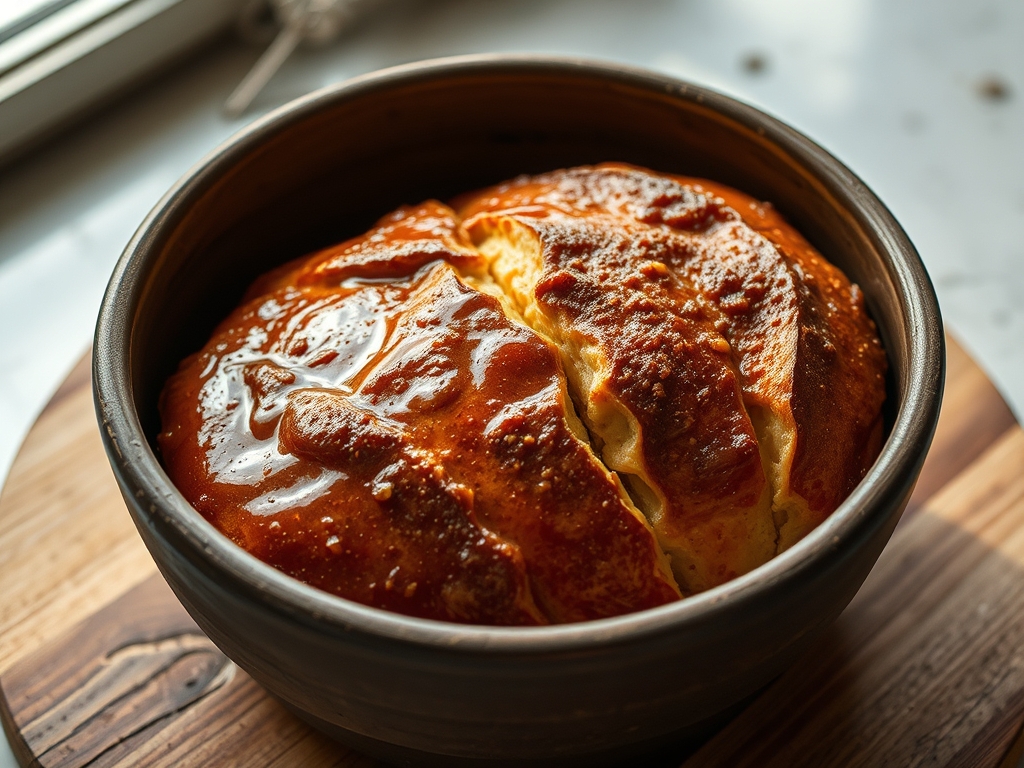
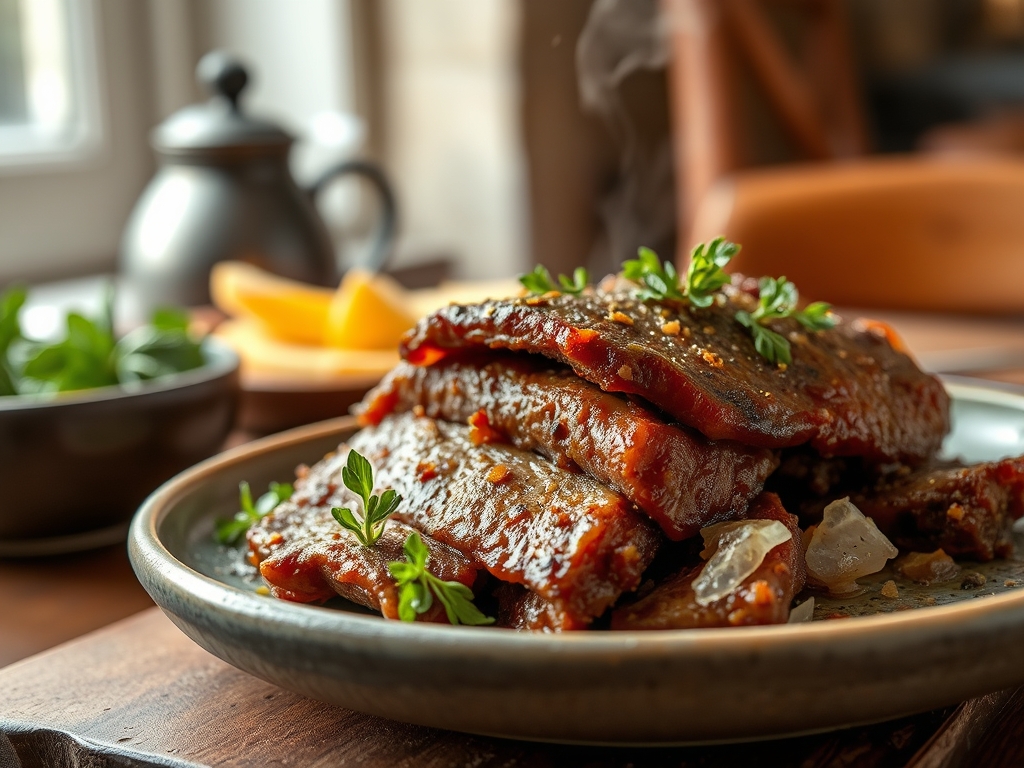
Referencing the Masterclass photo, you should observe a "cracked" appearance on the surface. This indicates that the fat underneath has expanded and rendered, pushing through the spice layer. If your brisket looks grey or "muddy," you likely had too much humidity and not enough airflow. To fix this mid-cook, increase the exhaust vent opening to pull more air across the surface. If the bark is too black and tastes like an ash tray, your wood was too green or your fire was oxygen-starved. The ideal Beef Brisket Bark has a shimmering, "wet" look despite being a solid crust. This is the result of the fat and smoke forming a varnish-like coating. If the color is dull, a light brush of warm tallow before the rest period will restore the aesthetic luster.
THE DEEP DIVE
Macro Nutrition Profile:
A standard 170g serving of brisket provides approximately 450 calories, 35g of protein, and 32g of fat. While high in saturated fats, it is a significant source of Vitamin B12, Zinc, and Selenium. The bark itself contains the highest concentration of minerals and salt.
Dietary Swaps:
- Vegan: For a similar visual profile, use a whole smoked watermelon or head of cauliflower, though the molecular structure will lack the collagen-to-gelatin conversion.
- Keto/GF: Brisket is naturally Keto and Gluten-Free. Ensure your rub does not contain brown sugar or cornstarch anti-caking agents.
Meal Prep & Reheating Science:
To maintain the Beef Brisket Bark during reheating, avoid the microwave. The agitation of water molecules will turn the bark into a sponge. Instead, vacuum seal slices with a teaspoon of tallow and reheat in a sous-vide bath at 65 degrees Celsius (150 degrees Fahrenheit). This preserves the fat-to-protein emulsion without further cooking the meat.
THE KITCHEN TABLE
Why is my bark bitter?
Bitter bark is usually caused by creosote. This happens when wood smolders without enough oxygen. Ensure your fire has a steady supply of air and only use well-seasoned hardwoods with a moisture content below 20 percent.
Can I get bark in an oven?
You can achieve a crust, but you cannot achieve true bark. Bark requires the chemical reaction between smoke particles and meat proteins. An oven lacks the phenolic compounds necessary to create that specific polymerized surface.
What is the best wood for bark?
Oak and Hickory are the gold standards. They provide a heavy smoke profile that builds a thick, dark bark. Fruitwoods like apple or cherry provide great color but may lack the intensity needed for a thick crust.
Should I use a binder like mustard?
A binder helps the rub stick, but it is not strictly necessary. The meat's natural moisture usually suffices. If you use mustard, the vinegar will evaporate, leaving no flavor behind but helping the spices adhere.
How long should I rest the brisket?
Resting is mandatory for at least two hours in an insulated cooler. This allows the internal juices to redistribute. If you cut it immediately, the moisture will escape, and your bark will lose its structural integrity.