The kitchen is a high-stakes laboratory where the difference between a dry, fibrous puck and a succulent masterpiece is measured in seconds and degrees. We are not just cooking; we are managing a complex thermal transition. When you drop Seared Pork Medallions into a shimmering pan, you are initiating a violent chemical transformation. The goal is a crust that shatters under the fork while the interior remains a blushing, tender landscape of moisture. This is the infrastructure of rapid-finish protein. We are hunting for the Maillard reaction, that glorious covalent bond between amino acids and reducing sugars that creates hundreds of different flavor compounds. If your pan is too cold, you are merely boiling the meat in its own juices. If it is too hot, you incinerate the exterior before the center can reach safety. Success requires an auditor's eye for detail and a chef's instinct for timing. We demand a finish that is gold, bold, and structurally sound. Let us audit the process.
THE DATA MATRIX
| Metric | Specification |
|---|---|
| Prep Time | 15 Minutes |
| Execution Time | 12 Minutes |
| Yield | 4 Servings |
| Complexity (1-10) | 4 |
| Estimated Cost per Serving | $4.50 USD |
THE GATHERS
Ingredient Protocol:
- 680g / 1.5 lbs Pork Tenderloin (trimmed of silverskin)
- 30ml / 2 tbsp High-Smoke Point Oil (Avocado or Grapeseed)
- 45g / 3 tbsp Unsalted Butter
- 3 Garlic Cloves (smashed)
- 2 Sprigs Fresh Thyme
- 120ml / 0.5 cup Low-Sodium Chicken Stock
- 60ml / 0.25 cup Dry White Wine
- 15ml / 1 tbsp Dijon Mustard
- 5g / 1 tsp Flaky Sea Salt
- 3g / 0.5 tsp Freshly Cracked Black Pepper
Section A: Ingredient Quality Audit:
The most common failure point is "weeping" meat. If your pork has been injected with a saline solution (common in low-grade supermarket cuts), the excess moisture will prevent a proper sear. To fix this, salt the meat 30 minutes prior to cooking and pat it excessively dry with paper towels. If your garlic is sprouting green centers, remove them; those embryos contain bitter compounds that will ruin a delicate pan sauce. Finally, ensure your butter is cold. Incorporating cold fat into a hot liquid is the only way to properly emulsify a sauce without it breaking into an oily mess.
THE MASTERCLASS
1. The Precision Cut
Utilize a sharp chef knife to slice the tenderloin into 1.5-inch thick rounds. Place each medallion between sheets of plastic wrap and use a meat mallet or the bottom of a heavy skillet to lightly flatten them to a uniform 1-inch thickness. This ensures even heat distribution across the entire surface area.
Pro Tip: Use a digital scale to ensure each medallion weighs approximately 85g. Uniformity in mass leads to uniformity in thermal finish; you cannot have one piece at 145F while another is at 160F.
2. The Thermal Threshold
Place a heavy stainless steel or cast iron skillet over medium-high heat. Add the oil and wait until you see the first wisps of smoke. This indicates the oil has reached the Leidenfrost point, where moisture from the meat will instantly turn to steam, lifting the protein slightly and preventing sticking.
Pro Tip: An infrared thermometer is the auditor's best friend here. You are looking for a surface temperature of 425F (218C) to trigger the Maillard reaction immediately upon contact.
3. The Sear Phase
Carefully place the Seared Pork Medallions into the pan, moving away from yourself to avoid oil splatter. Do not crowd the pan; leave at least an inch of space between pieces to allow steam to escape. Sear for 3 to 4 minutes without moving them until a deep mahogany crust forms.
Pro Tip: Use a fish spatula or high-heat tongs to flip the meat. Avoid using a fork, as piercing the exterior allows internal juices to escape, compromising the structural integrity of the protein.
4. The Butter Baste
Flip the medallions and immediately add the butter, garlic, and thyme to the pan. As the butter foams, tilt the pan and use a large spoon to continuously pour the hot, flavored fat over the meat. This process, known as arrosé, adds depth and ensures the top stays moist.
Pro Tip: This is where you infuse the meat with aromatics. The butter acts as a delivery vehicle for the fat-soluble compounds in the thyme and garlic, creating a complex flavor profile in seconds.
5. The Deglaze and Emulsify
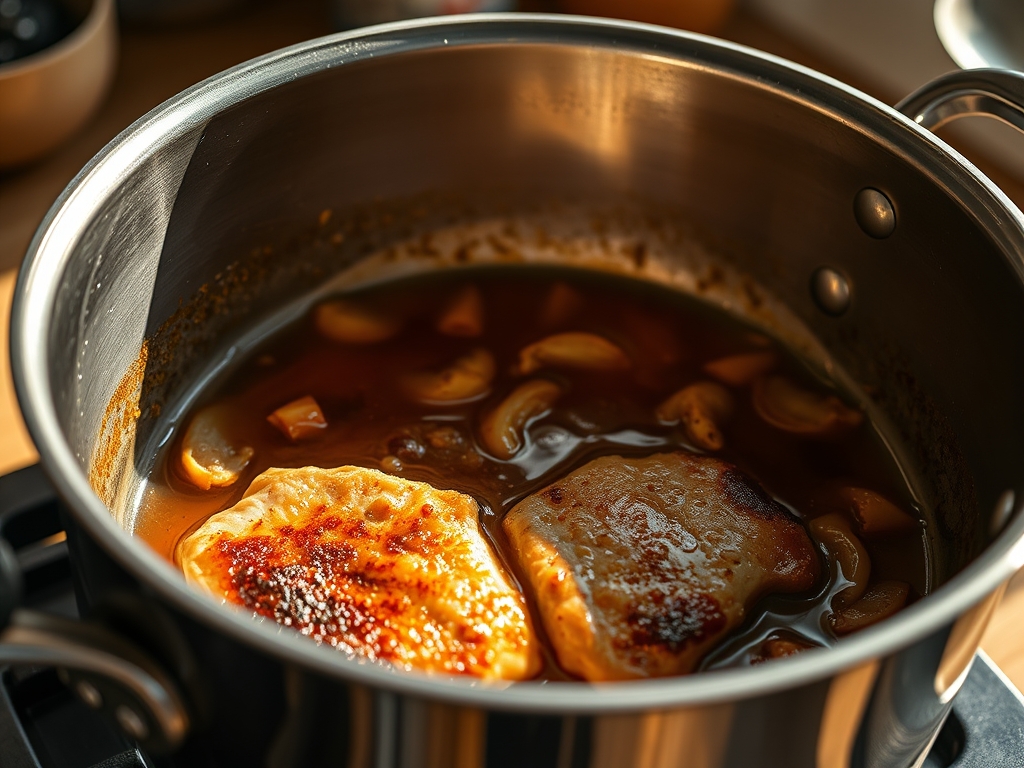
Remove the pork once it hits an internal temperature of 140F (60C) and let it rest on a warm plate. Pour off excess fat but keep the browned bits (the fond). Add the wine to deglaze, scraping the bottom with a bench scraper or wooden spoon. Whisk in the stock and mustard until viscous.
Pro Tip: Use a small saucier whisk to incorporate the mustard. The lecithin in the mustard acts as a natural emulsifier, binding the wine and stock into a silky, cohesive glaze that clings to the meat.
Section B: Prep & Timing Fault-Lines:
The "Carryover Cooking" trap is real. Pork continues to rise in temperature by 5 to 7 degrees after being removed from the heat. If you wait until the meat hits 145F in the pan, it will be overcooked by the time it reaches the table. Furthermore, failing to rest the meat is a structural crime. Resting allows the muscle fibers to relax and reabsorb the juices; cutting too early results in a dry plate and a puddle of wasted flavor.
THE VISUAL SPECTRUM
Section C: Thermal & Visual Troubleshooting:
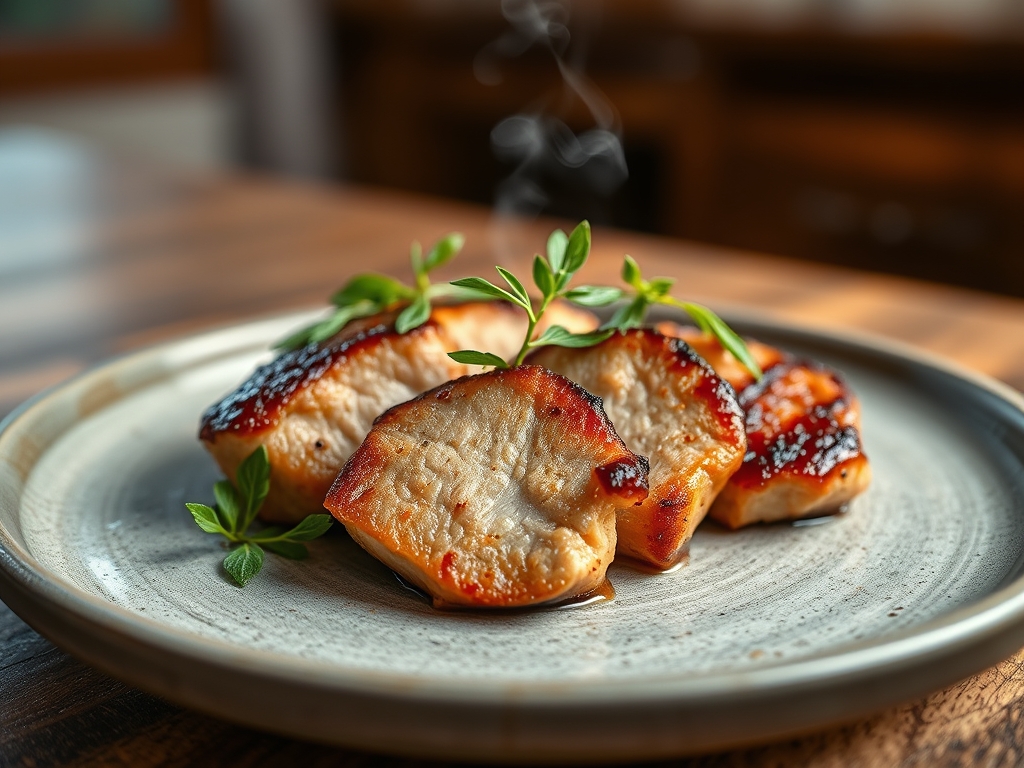
Look closely at the reference photo. The medallions exhibit a "Gilded Edge" appearance; a consistent dark brown ring with no grey "boiled" spots. If your meat looks grey, your pan temperature dropped too low or you overcrowded the surface. If the crust is black but the center is raw, your heat was too high, causing carbonization before heat transfer. The sauce should have a "Nappe" consistency, meaning it is thick enough to coat the back of a spoon without running off. If it looks transparent, continue to reduce the liquid to concentrate the sugars and proteins.
THE DEEP DIVE
Macro Nutrition Profile
Per serving: 280 Calories, 32g Protein, 14g Fat, 4g Carbohydrates. This is a high-density protein play with a moderate fat profile driven by the butter basting technique.
Dietary Swaps
- Vegan: Replace pork with extra-firm tofu "medallions" pressed for 30 minutes. Use vegan butter and vegetable stock.
- Keto: This recipe is naturally keto-compliant. Ensure the Dijon mustard contains no added sugars.
- GF: Ensure your chicken stock is certified gluten-free.
Meal Prep & Reheating Science
To maintain molecular structure during reheating, avoid the microwave. The high-frequency waves agitate water molecules, causing them to steam the meat from the inside out and turning it rubbery. Instead, reheat in a covered skillet with a splash of stock over low heat to gently aerate the sauce and bring the protein back to temp without further denaturing the fibers.
THE KITCHEN TABLE
Why is my pork still pink if it is safe?
Modern food safety standards confirm 145F is the target. A slight blush is a sign of moisture retention and proper cellular structure. It indicates the proteins have coagulated without becoming tightly knotted and dry.
Can I use pork loin instead of tenderloin?
You can, but the loin is a larger, tougher muscle. It requires thinner slicing and a more aggressive sear. The tenderloin is preferred for its fine grain and superior tenderness in rapid-finish applications.
What if my pan sauce breaks?
If the sauce separates into fat and liquid, remove it from the heat and whisk in a teaspoon of cold water or a small pat of cold butter. This lowers the temperature and helps the emulsion re-stabilize.
How do I get a better crust?
The enemy of the sear is moisture. Ensure the meat is room temperature and bone-dry. Use a heavy-bottomed pan that retains heat; thin pans lose temperature the moment the cold meat touches the surface.