Forget everything you know about the humble mollusk; we are entering the realm of high-velocity thermodynamics. When we analyze Seared Scallops Data, we are not just looking at dinner; we are auditing a high-stakes chemical reaction that occurs in the narrow window between raw protein and rubberized failure. The objective is simple but the execution is ruthless. We require a perfect Maillard reaction on the exterior while maintaining a buttery, translucent core that barely touches the threshold of coagulation. This is a technical audit of moisture content versus surface temperature. If your pan is not screaming, you are not cooking; you are merely poaching in a puddle of expensive seawater. We demand a crust so crisp it shatters, providing a structural contrast to the viscous interior. Success requires a mastery of thermal conductivity and a refusal to compromise on surface dryness. This is the gold standard of rapid protein denaturation. Let us break down the metrics and ensure your kitchen infrastructure can handle the heat.
THE DATA MATRIX
| Metric | Specification |
|---|---|
| Prep Time | 15 Minutes |
| Execution Time | 4 Minutes |
| Yield | 4 Servings |
| Complexity | 7/10 |
| Estimated Cost per Serving | $12.00 – $18.00 |
THE GATHERS
Ingredient Protocol:
- 500g / 1.1 lbs U-10 Dry-Packed Sea Scallops (The "U-10" refers to the count per pound).
- 30ml / 2 tbsp High-Smoke Point Oil (Grapeseed or Avocado oil).
- 45g / 3 tbsp Unsalted European-Style Butter.
- 3g / 0.5 tsp Fine Sea Salt.
- 2g / 0.25 tsp Freshly Cracked White Pepper.
- 10ml / 2 tsp Fresh Lemon Juice.
- 2 Sprigs Fresh Thyme (To infuse the butter).
Section A: Ingredient Quality Audit:
The primary failure point in Seared Scallops Data is the presence of sodium tripolyphosphate. If your scallops are sitting in a milky white liquid, they have been chemically treated to retain water. This is an audit nightmare. This excess moisture will steam the protein, preventing the Maillard reaction and leaving you with a rubbery, grey mess. The fix? Only purchase "dry" scallops. If you are stuck with "wet" scallops, you must perform a saline soak (1 quart water to 2 tablespoons salt) for 10 minutes, followed by an aggressive drying session with heavy-duty paper towels and a 30-minute air-dry in the refrigerator. Use a digital scale to ensure your salt ratios are precise; consistency is the hallmark of a professional kitchen.
THE MASTERCLASS
1. The Desiccation Protocol
Remove the small, tough side muscle (the abductor) from each scallop. Place the scallops on a tray lined with lint-free towels. Use a second towel to press firmly on the tops. Surface moisture is the enemy of the crust. Let them air-chill for 20 minutes to further dehydrate the surface.
Pro Tip: The science of evaporation dictates that any surface water will absorb thermal energy to turn into steam before the browning can begin. By using a bench scraper to move them onto a fresh, dry surface, you ensure maximum heat transfer to the protein.
2. Thermal Calibration
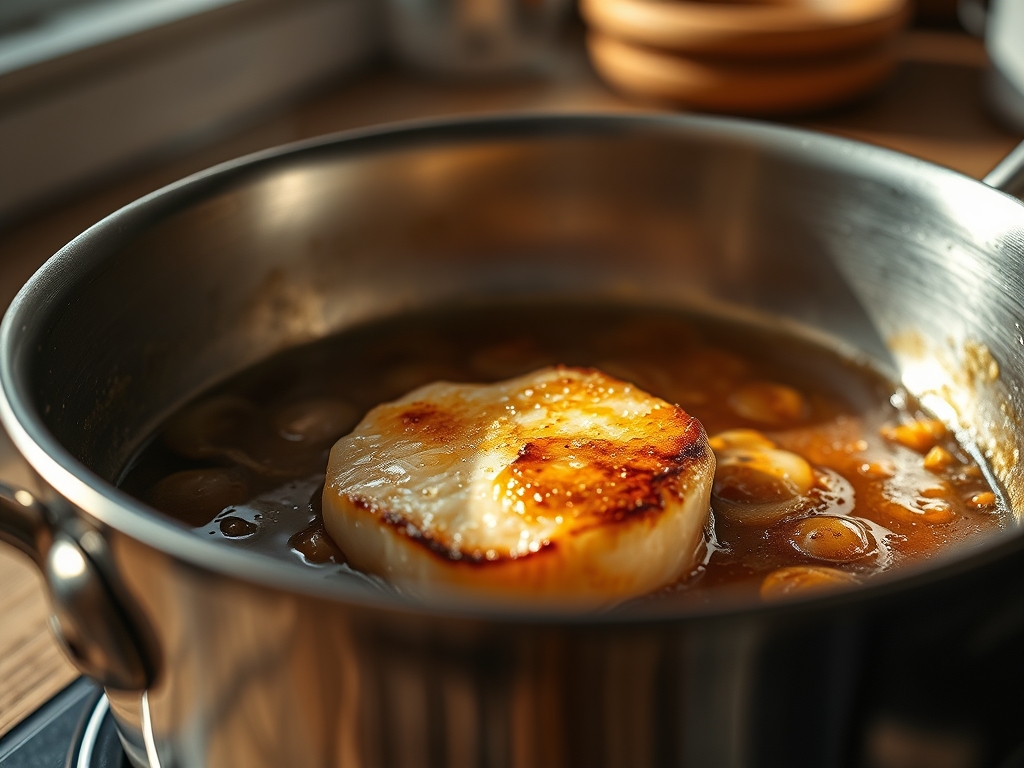
Place a heavy-bottomed stainless steel or cast iron skillet over high heat. Add the high-smoke point oil. You are looking for the "shimmer" point, just before the oil begins to smoke. This indicates the pan is at approximately 425 degrees Fahrenheit (218 degrees Celsius).
Pro Tip: Use an infrared thermometer to verify the surface temperature. Stainless steel provides better deglaze potential for pan sauces, while cast iron offers superior thermal mass to prevent temperature drops when the cold protein hits the metal.
3. The Kinetic Placement
Season the scallops with salt and pepper only at the very last second. Place them in the pan in a clockwise pattern, starting at the 12 o'clock position. Do not crowd the pan; leave at least one inch of space between each unit to allow steam to escape.
Pro Tip: Salt is a humectant; it draws moisture to the surface. If you season too early, you create a layer of brine that inhibits the sear. Use a saucier nearby to keep your basting ingredients ready for the final phase.
4. The Arrosage Technique
After 2 minutes, once a deep golden crust has formed, flip the scallops. Immediately drop the butter and thyme into the pan. As the butter begins to render and foam, tilt the pan and use a large spoon to bathe the scallops in the hot, aromatic fat.
Pro Tip: This technique, known as arrosage, uses the butter to infuse the protein with flavor while the milk solids brown, adding a nutty complexity. The foam acts as an insulator, finishing the interior gently.
Section B: Prep & Timing Fault-Lines:
Timing errors usually stem from a lack of mise en place. If you are searching for your lemon juice while the scallops are in the pan, you have already lost. The window between "perfect" and "overcooked" is approximately 30 seconds. To fix timing issues, use a digital timer synchronized with your placement pattern. If the scallops stick to the pan, do not force them. Protein will naturally release from the metal once the Maillard reaction has sufficiently dehydrated the contact points. If it sticks, it is not ready.
THE VISUAL SPECTRUM
Section C: Thermal & Visual Troubleshooting:
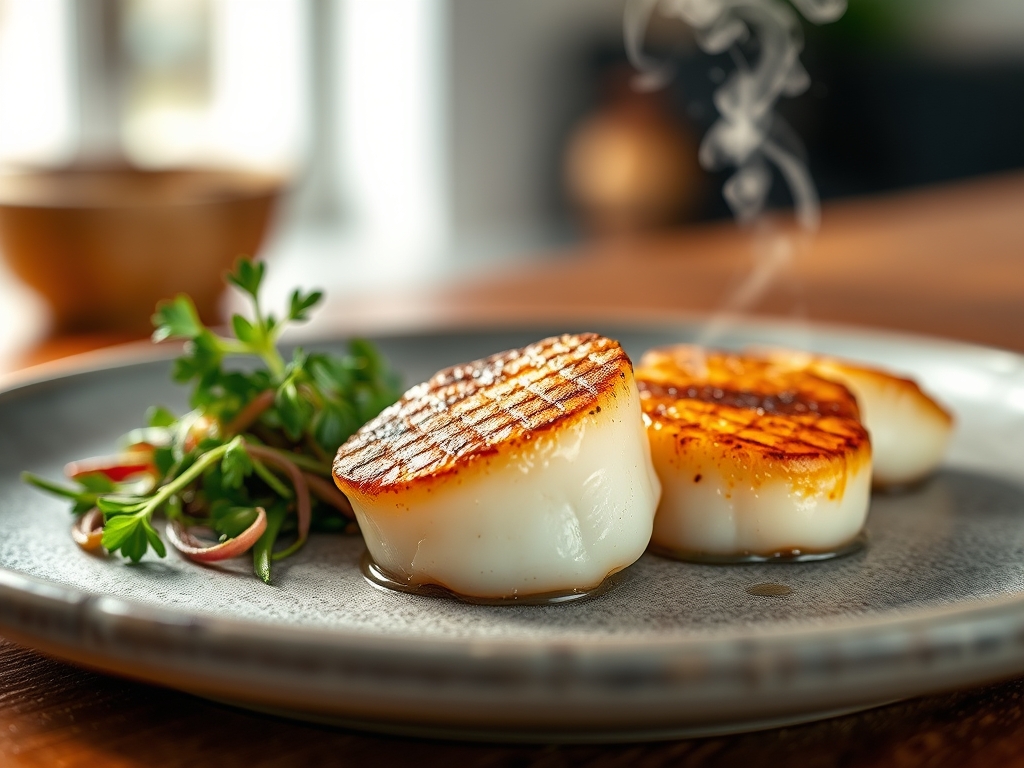
Referencing the Seared Scallops Data image, notice the uniform, edge-to-edge mahogany crust. If your scallops show a "bullseye" pattern (brown in the center, white on the edges), your pan is warped or your heat source is too small for the skillet. If the crust is pale and mottled, your heat was too low or the scallops were too wet. For dull colors, ensure you are using a high-fat butter for the finish; the milk solids provide the "glow" seen in professional photography. If the texture is grainy, the scallop has surpassed 130 degrees Fahrenheit (54 degrees Celsius), causing the protein fibers to tighten and squeeze out all moisture. The visual cue for a perfect interior is a slight translucency in the very center, which will carry over to a perfect opaque finish during the 2-minute rest.
THE DEEP DIVE
Macro Nutrition Profile
Per 125g serving: 130 Calories, 24g Protein, 3g Fat, 5g Carbohydrates. This is a high-density protein source with minimal caloric overhead, making it an elite choice for metabolic efficiency.
Dietary Swaps
- Vegan: Use thick-cut King Oyster Mushroom discs. Score the surfaces and sear exactly like a scallop, using vegan butter and a splash of soy sauce to mimic the umami profile.
- Keto/GF: This recipe is inherently Keto and Gluten-Free. To enhance the fat profile, increase the butter arrosage or finish with a drizzle of truffle oil.
Meal Prep & Reheating Science
Scallops do not react well to traditional reheating. The microwave will turn them into erasers. To maintain molecular structure, eat them fresh. If you must reheat, use a gentle "low and slow" approach in a covered pan with a teaspoon of water to create a steam-chamber, pulling them the moment they are warm to the touch.
THE KITCHEN TABLE
Why do my scallops always turn out rubbery?
You are likely overcooking them or using "wet" scallops. The internal temperature should never exceed 130 degrees Fahrenheit. Once they lose their translucency, pull them from the heat immediately. Residual heat will finish the job.
Can I use non-stick pans for searing?
It is not recommended. Non-stick coatings cannot safely reach the temperatures required for a professional Maillard reaction. Use stainless steel or cast iron to ensure a high-quality crust and proper fond development for a pan sauce.
What oil is best for high-heat searing?
Avoid extra virgin olive oil or butter for the initial sear; their smoke points are too low. Use grapeseed, avocado, or refined peanut oil. Save the butter for the final 60 seconds to infuse flavor without burning.
How do I know when to flip them?
Watch the sides. When the golden-brown color creeps up about one-third of the way from the bottom, the scallop is ready to be flipped. It should release from the pan with zero resistance.