Listen to the sound of high-octane culinary engineering. It is the aggressive, rhythmic sizzle of protein meeting pre-heated ferrous metal. When you commit to the art of Cast Iron Pork Chops, you are not merely cooking; you are managing a high-stakes thermal exchange. The goal is a crust so dark and shattered with texture that it rivals a geode, while the interior remains a pressurized chamber of moisture. Most home cooks treat pork with a timid, apologetic heat that results in a grey, weeping slab of disappointment. We do not do that here. We leverage the massive thermal mass of the skillet to trigger a violent Maillard reaction, transforming simple amino acids and reducing sugars into a complex, savory matrix. This is about the physics of the sear. We are hunting for that perfect golden-brown hue that signals a successful molecular reconfiguration. Grab your apron and calibrate your senses. We are moving from raw biological material to a masterpiece of direct heat conductivity in under twenty minutes.
THE DATA MATRIX
| Metric | Specification |
|---|---|
| Prep Time | 15 Minutes |
| Execution Time | 12 Minutes |
| Yield | 2 Servings |
| Complexity (1-10) | 4 |
| Estimated Cost per Serving | $4.50 – $6.00 |
THE GATHERS
Ingredient Protocol:
- 2 Bone-in Thick-Cut Pork Chops (approx. 340g / 12oz each)
- 30ml / 2 tbsp High-Smoke Point Oil (Avocado or Grapeseed)
- 45g / 3 tbsp Unsalted European-style Butter
- 4 Garlic Cloves, smashed (approx. 20g)
- 3 sprigs Fresh Thyme (approx. 5g)
- 10g / 2 tsp Coarse Kosher Salt
- 5g / 1 tsp Freshly Cracked Black Pepper
Section A: Ingredient Quality Audit:
If your pork appears pale, watery, or sits in a pool of liquid in the packaging, you are dealing with "PSE" (Pale, Soft, Exudative) meat. This is often the result of poor processing or low-quality genetics. To fix this in the kitchen, you must perform a dry-brine protocol. Use your digital scale to measure out salt at 1% of the meat's weight and apply it 45 minutes before cooking. This draws moisture out and then reabsorbs it, seasoning the deep muscle fibers and tightening the protein structure. If your herbs are wilted, do not toss them. Shock them in an ice-water bath for ten minutes to restore turgor pressure before they hit the hot fat to infuse the butter.
THE MASTERCLASS
Step 1: Surface Dehydration and Seasoning
Pat the chops bone-dry using lint-free paper towels. Moisture is the enemy of the sear; any surface water will turn to steam and insulate the meat from the heat. Season aggressively with salt and pepper from a height of twelve inches to ensure even distribution across the entire surface area.
Pro Tip: Use a bench scraper to gather any stray seasoning from your cutting board and press it into the sides of the chop. The science here is simple: surface dryness allows the temperature to exceed 100C immediately, triggering the Maillard reaction without delay.
Step 2: Thermal Priming
Place your cast iron skillet over medium-high heat for five full minutes. You want the metal to reach approximately 230C (450F). Add the oil only when the pan is hot. It should shimmer and move with a viscous, water-like consistency across the surface.
Pro Tip: An infrared thermometer is the professional tool of choice here. If you lack one, look for the "whisper of smoke." This indicates the oil is at its kinetic limit and ready to receive the protein for maximum direct heat conductivity.
Step 3: The Initial Contact
Lay the chops into the pan away from your body to prevent hot oil splatter. Press down firmly with a heavy press or a flat spatula for the first thirty seconds to ensure total surface contact. Do not move them. Let the crust form undisturbed for 3 to 4 minutes.
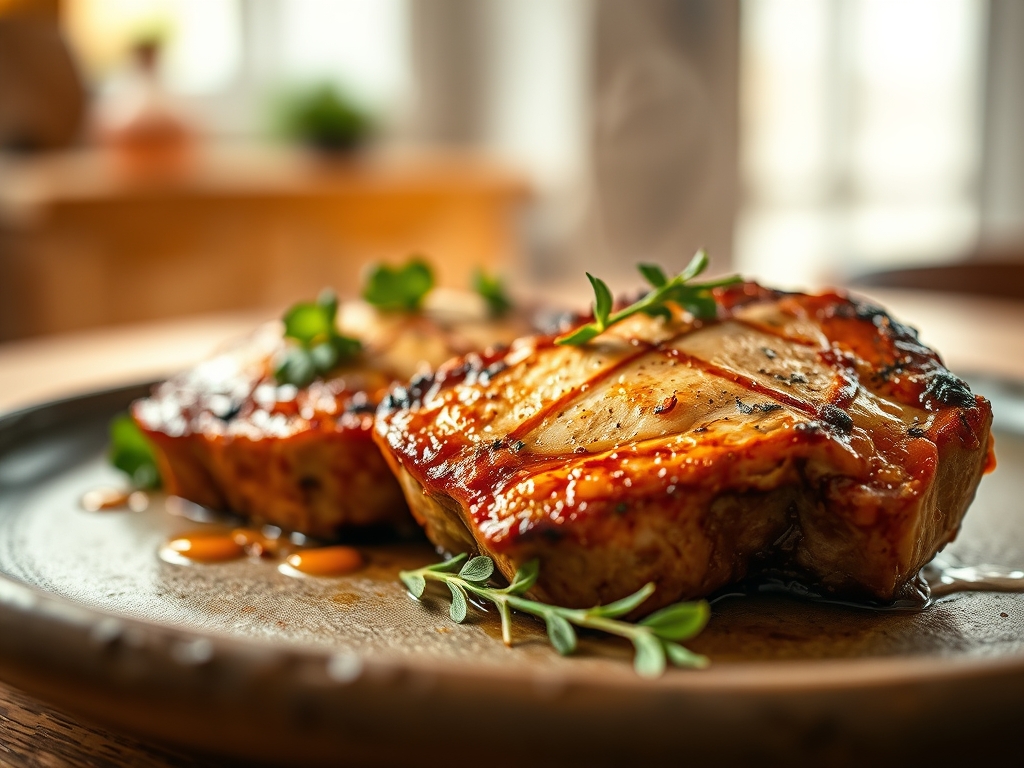
Pro Tip: Use a digital scale to weigh down a second smaller pan on top of the chops. This constant pressure prevents the meat from curling as the connective tissues contract, ensuring an edge-to-edge crust that looks exactly like the deep mahogany tones in the reference photo.
Step 4: The Butter Baste (Arrosé)
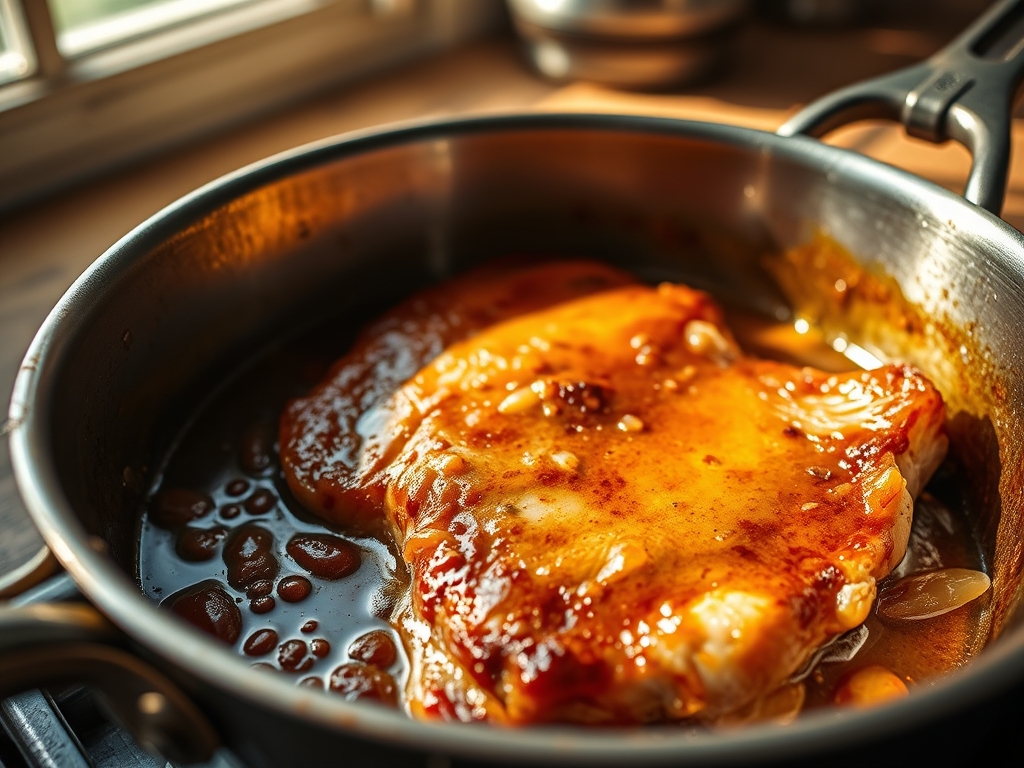
Flip the chops. Drop in the butter, smashed garlic, and thyme. Tilt the pan so the foaming butter pools at the bottom. Use a large spoon to rapidly and continuously drench the chops in the hot, aromatic fat. This is where you infuse the meat with botanical aromatics.
Pro Tip: A professional saucier spoon is ideal for this because of its deep well. The butter acts as a finishing thermal fluid, cooking the nooks and crannies that the flat pan cannot reach while the milk solids brown to add a nutty complexity.
Step 5: The Carry-Over Rest
Remove the chops when an instant-read thermometer hits 57C (135F). Transfer them to a wire rack set over a sheet tray. Pour the remaining pan juices over them and let them rest for at least 8 minutes.
Pro Tip: Resting is not optional. It allows the internal pressure to stabilize and the juices to re-distribute. If you cut too soon, the viscous internal fluids will purge onto the plate, leaving the fibers dry and cordy.
Section B: Prep & Timing Fault-Lines:
The most common human error is "pan-crowding." If you attempt to cook four chops in a ten-inch skillet, the ambient temperature drops instantly. This causes the meat to boil in its own juices rather than sear. If you find the pan cooling down, remove one chop immediately and finish in batches. Another fault-line is the "cold-center syndrome." If you take pork directly from the fridge to the pan, the exterior will burn before the interior reaches safety. Always temper your meat at room temperature for 20 minutes before execution.
THE VISUAL SPECTRUM
Section C: Thermal & Visual Troubleshooting:
Look closely at the Masterclass photo. Notice the "Glistening Equilibrium." The surface is not dry; it is coated in a thin film of rendered fat and butter. If your chops look dull or matte, you likely skimped on the butter baste or failed to deglaze the pan for a finishing jus. If the crust is spotted rather than uniform, your pan was not level or you failed to apply pressure during the initial sear. For uneven browning, check your heat source; residential burners often have "hot spots." Rotate the pan 90 degrees every two minutes to compensate for hardware inconsistencies.
THE DEEP DIVE
Macro Nutrition Profile:
A standard 170g / 6oz serving of these Cast Iron Pork Chops provides approximately 42g of protein, 18g of fat (heavily influenced by the butter baste), and 0g of carbohydrates. It is a high-density fuel source rich in Vitamin B6 and Selenium.
Dietary Swaps:
- Vegan: Replace the pork with thick-cut cauliflower steaks and use a vegan butter alternative with a high lecithin content to ensure browning.
- Keto/GF: This recipe is inherently Keto and Gluten-Free. To enhance the piquant profile, add a splash of apple cider vinegar to the pan during the final basting stage.
Meal Prep & Reheating Science:
To maintain the molecular structure during reheating, avoid the microwave. The high-frequency waves agitate water molecules, toughening the protein. Instead, use an oven at 120C (250F) with a splash of chicken stock to aerate the environment and prevent dehydration.
THE KITCHEN TABLE
Why is my pork chop tough even if it is pink?
You likely skipped the rest period or used a "center-cut" chop without enough intramuscular fat. Always opt for rib-end chops for better marbling. The resting phase allows muscle fibers to relax and retain moisture.
Can I use a stainless steel pan instead?
Yes, but stainless steel has less thermal mass. You will need to monitor the heat more closely as it fluctuates faster. Cast iron is superior for its ability to hold and radiate consistent, intense energy.
What oil is best for searing?
Use oils with a smoke point above 200C (400F). Avocado, grapeseed, or refined peanut oil are ideal. Avoid extra virgin olive oil for this high-heat application; it will break down and become bitter.
Do I need to leave the bone in?
The bone acts as an insulator, slowing the cook near the center and providing a more forgiving window for doneness. It also adds a structural aesthetic that is essential for a professional presentation.