Listen to the sound of cellular structural collapse. That high-pitched hiss as cold protein meets a preheated cast iron surface is the symphony of the Maillard reaction in full effect. We are not merely cooking; we are conducting a high-stakes thermal audit of the Seared Flank Steak. This cut of beef is a masterpiece of long, lean muscle fibers that require surgical precision to master. If you fail to respect the tension of these fibers, you will end up with a rubberized slab of disappointment. However, if you manage the heat transfer correctly, you unlock a depth of flavor that more expensive cuts simply cannot touch. We are aiming for a crust so dark it flirts with the edge of carbonization while maintaining a center that remains succulent and tender. This is the intersection of thermodynamics and gastronomy. Prepare to transform a humble flank into a high-performance fuel source that vibrates with piquant energy and savory intensity.
THE DATA MATRIX
| Metric | Specification |
|---|---|
| Prep Time | 20 Minutes (plus optional 2-hour brine) |
| Execution Time | 12 Minutes |
| Yield | 4 Servings |
| Complexity (1-10) | 7 (Precision timing required) |
| Estimated Cost per Serving | $6.50 – $8.00 USD |
THE GATHERS
Ingredient Protocol:
- 900g / 2 lbs Flank Steak (trimmed of silver skin)
- 30ml / 2 tbsp Neutral High-Smoke Point Oil (Avocado or Grapeseed)
- 15g / 1 tbsp Kosher Salt
- 5g / 1 tsp Freshly Cracked Black Peppercorns
- 45g / 3 tbsp Unsalted Butter (for basting)
- 3 Large Garlic Cloves (crushed)
- 2 Sprigs Fresh Rosemary
- 15ml / 1 tbsp Balsamic Vinegar (to deglaze)
Section A: Ingredient Quality Audit:
Sub-par raw materials are the primary cause of culinary failure. If your steak appears pale or wet, it has likely been "pumped" with a saline solution to increase weight. This excess moisture will steam the meat rather than sear it. The fix: Use a digital scale to track weight loss during a 24-hour dry-brine in the refrigerator. This allows surface moisture to evaporate and concentrates the beefy flavor. If your garlic is sprouting green "hearts," it will impart a bitter, acrid note when you infuse the butter. Remove the germ manually or source fresher bulbs to ensure a clean, aromatic profile.
THE MASTERCLASS
Step 1: Surface Dehydration and Seasoning
Pat the steak dry with surgical precision using heavy-duty paper towels. Apply the salt and pepper liberally from a height of twelve inches to ensure even distribution. Use your digital scale to ensure you are hitting a 1.5 percent salt-to-meat ratio for optimal flavor penetration.
Pro Tip: Moisture is the enemy of the Maillard reaction. By removing surface water, you ensure the thermal energy goes directly into browning the proteins rather than evaporating liquid. This creates a superior crust.
Step 2: The High-Heat Deployment
Place a heavy cast iron skillet over high heat until it reaches 450 degrees Fahrenheit. Add the oil and wait for it to shimmer and just begin to smoke. Lay the steak away from you to avoid oil splatter. Use a bench scraper to ensure no stray seasoning remains on the board.
Pro Tip: High-carbon steel or cast iron has high thermal mass. This prevents the pan temperature from crashing when the cold meat is introduced, ensuring the searing process is instantaneous and aggressive.
Step 3: The Flip and Aromatic Infusion
Sear for 4 minutes per side. Once the first flip occurs, drop the heat to medium-high and add the butter, garlic, and rosemary. Use a large spoon to render the fat and continuously baste the steak. This is known as "arroser" in professional circles.
Pro Tip: Basting with hot butter creates a convective heat environment. This helps cook the interior of the steak more evenly while the milk solids in the butter brown, adding a nutty complexity to the crust.
Step 4: The Deglaze and Rest
Remove the steak when the internal temperature hits 125 degrees Fahrenheit for medium-rare. Immediately deglaze the pan with balsamic vinegar to capture the fond. Transfer the steak to a wire rack.
Pro Tip: Resting is non-negotiable. It allows the muscle fibers to relax and reabsorb the viscous juices. If you cut it too soon, the internal pressure will force the liquid out, leaving you with dry meat.
Section B: Prep & Timing Fault-Lines:
The most common human error is the "Cold Center Syndrome." If you take the steak directly from the fridge to the pan, the exterior will burn before the interior reaches the target temperature. Always allow the meat to temper at room temperature for at least 45 minutes. Another fault-line is the "Crowded Pan." If you attempt to cook two large steaks in one small skillet, the temperature will drop, and the meat will boil in its own juices. Work in batches to maintain high-heat integrity.
THE VISUAL SPECTRUM
Section C: Thermal & Visual Troubleshooting:
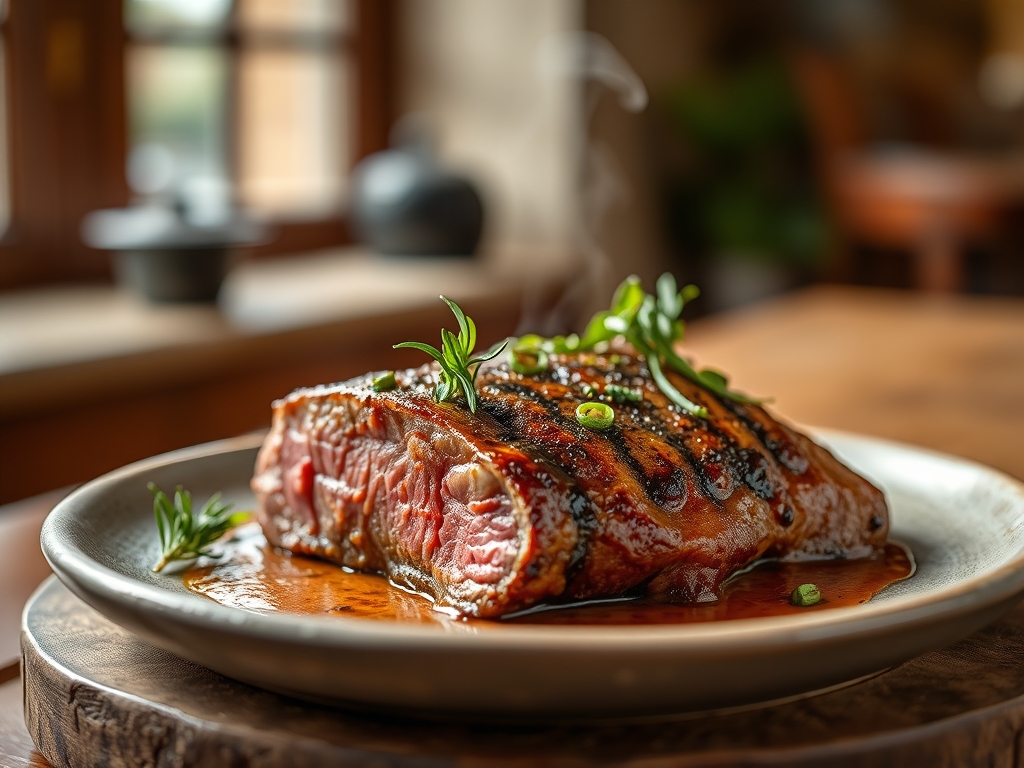
Examine the Masterclass photo. Notice the deep, mahogany-colored crust; this is the visual cue for a successful sear. If your steak looks grey or tan, your pan wasn't hot enough. If the crust is black and smells like a tire fire, you used an oil with a low smoke point like extra virgin olive oil. The interior should show a vibrant pink gradient from edge to edge. If you see a thick grey band of overcooked meat surrounding a tiny red center, you seared for too long at a lower temperature. To fix this, increase the heat and decrease the duration of contact.
THE DEEP DIVE
Macro Nutrition Profile:
A standard 150g serving of Seared Flank Steak provides approximately 380 calories, 42g of protein, 22g of fat, and 0g of carbohydrates. It is an iron-dense powerhouse, perfect for post-exertion recovery.
Dietary Swaps:
- Vegan: Swap the flank steak for a thick-cut "steak" of Lion's Mane mushroom. Use vegan butter for the basting phase to maintain the viscous mouthfeel.
- Keto/GF: This recipe is naturally Keto and Gluten-Free. Ensure your balsamic vinegar does not contain added thickeners or sugars that might spike glucose.
Meal Prep & Reheating Science:
To maintain the molecular structure during reheating, avoid the microwave at all costs. The microwave agitates water molecules, which steams the meat from the inside out, toughening the fibers. Instead, use a low-temperature oven (250 degrees Fahrenheit) until the internal temp reaches 110 degrees. This preserves the medium-rare integrity without further shrinking the muscle fibers.
THE KITCHEN TABLE
Why is my flank steak so chewy?
You likely sliced it with the grain. Flank steak has long, distinct fibers. You must slice perpendicular to these fibers to shorten them, making the meat easy to masticate. Use a sharp carving knife for clean, thin bias cuts.
Can I use a non-stick pan?
Negative. Non-stick coatings are not designed for the high-heat thresholds required for a proper Maillard reaction. Furthermore, overheating non-stick pans can release toxic fumes. Stick to cast iron, carbon steel, or high-quality stainless steel for this operation.
What is the best oil for searing?
Use oils with a smoke point above 400 degrees Fahrenheit. Avocado oil is the gold standard, but grapeseed or refined peanut oil also perform admirably. Avoid unrefined oils or butter during the initial high-heat phase to prevent acrid smoke.
Do I really need to rest the meat?
Yes. Resting allows the liquid inside the meat to redistribute. During cooking, heat pushes moisture toward the center. Resting lets that moisture migrate back to the edges, ensuring every bite is equally succulent and the juices stay inside.