Listen up, starch enthusiasts and gluten architects. We are not here to bake a mere loaf of bread; we are here to engineer a structural masterpiece of moisture retention and Maillard excellence. The humble potato is the secret weapon in this tactical maneuver. By introducing boiled, mashed tubers into a traditional dough matrix, we are manipulating the very physics of crumb elasticity. This is about the Potato Bread Crust. We want a shell that shatters like fine porcelain upon impact but yields to a center so soft it feels like a culinary cloud. Most bakers fail because they treat the potato as a flavor additive rather than a functional hydrocolloid. We are going to harness those starches to trap steam, ensuring that the interior remains plush while the exterior develops a deep, mahogany lacquer. This is a technical audit of the rustic loaf. We are looking for high-contrast textures and a golden hue that suggests a lifetime of professional experience. Prepare your surfaces; we are about to turn basic carbohydrates into a high-performance gastronomic asset.
THE DATA MATRIX
| Metric | Specification |
|---|---|
| Prep Time | 45 Minutes |
| Execution Time | 3 Hours 30 Minutes |
| Yield | 2 Large Rustic Loaves |
| Complexity (1-10) | 6 |
| Estimated Cost per Serving | $0.45 |
THE GATHERS
Ingredient Protocol:
- 500g / 4 cups All-Purpose Flour (Unbleached)
- 250g / 1 cup Russet Potato (Peeled, boiled, and mashed)
- 200ml / 0.85 cup Potato Cooking Water (Reserved and cooled to 105F)
- 10g / 2 tsp Active Dry Yeast
- 12g / 2.5 tsp Fine Sea Salt
- 30g / 2 tbsp Unsalted Butter (Softened)
- 15ml / 1 tbsp Honey or Malt Syrup
- 1 Large Egg (For the wash)
Section A: Ingredient Quality Audit:
If your potatoes are waxy (like Red Bliss or Fingerlings), the starch content will be too low to provide the necessary structural "lift," resulting in a gummy interior. Stick to Russets for maximum starch granules. If your yeast fails to bloom in the reserved potato water, the water was likely too hot, effectively killing the microorganisms. Always verify temperatures with a digital probe. If the flour has a low protein content (below 10 percent), the dough will lack the tensile strength to hold the heavy potato mash; reinforce with a tablespoon of vital wheat gluten if necessary.
THE MASTERCLASS
Step-by-Step Execution:
1. Tuber Liquefaction and Activation
Boil the peeled Russets until they lose all structural integrity. Drain them but reserve the starchy liquid. Mash the potatoes until they are completely smooth; any lumps will create "islands" of unhydrated starch in your final crumb. Combine the warm potato water, honey, and yeast in the bowl of a stand mixer. Let it sit until a foamy head appears.
Pro Tip: Use a fine-mesh sieve or a potato ricer to process the tubers. This ensures the starch particles are evenly distributed, which allows them to interfere with gluten formation just enough to create that signature soft texture.
2. The Primary Integration
Add the mashed potatoes and softened butter to the yeast mixture. Using a dough hook or a sturdy silicone spatula, gradually incorporate the flour and salt. Mix on low speed until a shaggy mass forms and no dry flour remains at the bottom of the bowl.
Pro Tip: This is the "hydration phase." The potato starches are highly hygroscopic, meaning they soak up water more efficiently than wheat. Using a digital scale for these measurements is non-negotiable for consistency.
3. Structural Development (The Knead)
Increase the mixer speed to medium. Knead the dough for 8 to 10 minutes until it clears the sides of the bowl. The dough should be tacky but not sticky. It should pass the "windowpane test," where a small piece can be stretched thin enough to see light through it without tearing.
Pro Tip: If the dough feels too viscous and refuses to pull away from the bowl, use a bench scraper to manage the mass on a lightly floured surface for a final hand-knead. This develops the external tension required for a superior Potato Bread Crust.
4. Bulk Fermentation and Shaping
Place the dough in a lightly oiled bowl and cover with a damp cloth. Let it rise in a warm, draft-free environment until doubled in size (about 60 to 90 minutes). Punch the dough down to aerate and release excess carbon dioxide. Divide the dough into two equal portions and shape them into tight rounds or batards.
Pro Tip: Use a bench scraper to create tension on the surface of the loaves by pulling the dough toward you on an un-floured section of the counter. This tension is what prevents the loaf from flattening out during the bake.
5. The Final Proof and Thermal Application
Place the shaped loaves on a parchment-lined baking sheet. Cover and let rise for another 45 minutes. Preheat your oven to 400F (204C). Brush the tops with a beaten egg wash mixed with a splash of water. Score the tops with a sharp lamé or razor blade to control the expansion. Bake for 30 to 35 minutes.
Pro Tip: For a professional Potato Bread Crust, place a shallow pan of water on the bottom rack of the oven during the first 10 minutes. The steam prevents the crust from setting too early, allowing for maximum "oven spring."
Section B: Prep & Timing Fault-Lines:
Timing is the most common point of failure. If you over-proof the dough, the gluten structure will collapse under the weight of the potato starch, resulting in a flat, dense brick. If the oven temperature is too low, you will fail to render the moisture out of the surface, leading to a pale, soft exterior rather than a crisp crust. Always use an oven thermometer to verify your appliance's internal calibration.
THE VISUAL SPECTRUM
Section C: Thermal & Visual Troubleshooting:
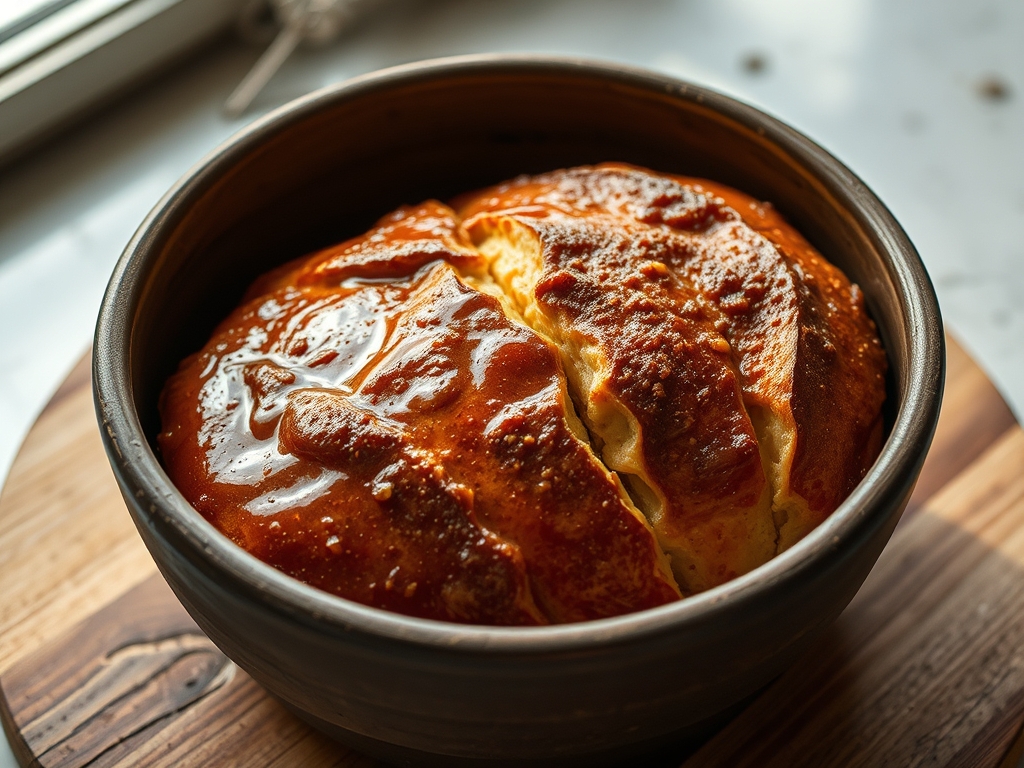
The Masterclass photo displays a deep, "tiger-skin" mottling on the Potato Bread Crust. This is achieved through the egg wash and high initial heat. If your loaf looks dull or matte, you likely skipped the egg wash or the oven was too dry. If the loaf has "blowouts" (cracks in random places), your scoring was not deep enough or the dough was under-proofed. The ideal visual cue is a rich, chestnut brown with a slight sheen that crackles when pressed. If the bottom is burnt while the top is pale, move your baking rack to a higher position to balance the thermal load.
THE DEEP DIVE
- Macro Nutrition Profile: Each serving (approximately one thick slice) contains roughly 160 calories, 4g protein, 30g carbohydrates, and 3g fat. The addition of potato increases the potassium and Vitamin C content compared to standard white bread.
- Dietary Swaps: To make this Vegan, substitute the butter with a high-quality olive oil and use a maple syrup wash instead of egg. For a Gluten-Free version, use a 1-to-1 GF flour blend containing xanthan gum, though the rise will be less dramatic.
- Meal Prep & Reheating Science: To maintain the molecular structure, store the bread in a paper bag at room temperature for up to 3 days. Do not refrigerate, as this accelerates retrogradation (staling). To reheat, wrap in foil and bake at 350F for 10 minutes to re-gelatinize the starches.
THE KITCHEN TABLE
Why is my potato bread so heavy?
You likely used too much potato or didn't knead long enough. The potato adds weight; you need a strong gluten network to support it. Ensure you knead until the dough is elastic and passes the windowpane test.
Can I use instant mashed potato flakes?
Yes, in a pinch. Use 1/2 cup of flakes and increase the water by 1/4 cup. However, fresh Russets provide superior flavor and a more complex starch profile for the Potato Bread Crust.
Why does the crust soften after cooling?
Potato bread is naturally high in moisture. As the bread cools, internal steam migrates to the crust. To keep it crisp, cool the loaf completely on a wire rack to allow air circulation on all sides.
What is the best way to score this dough?
Use a very sharp blade and make one confident, long slash down the center. Because the dough is hydrated and slightly sticky, a quick, decisive movement prevents the blade from dragging and tearing the surface.