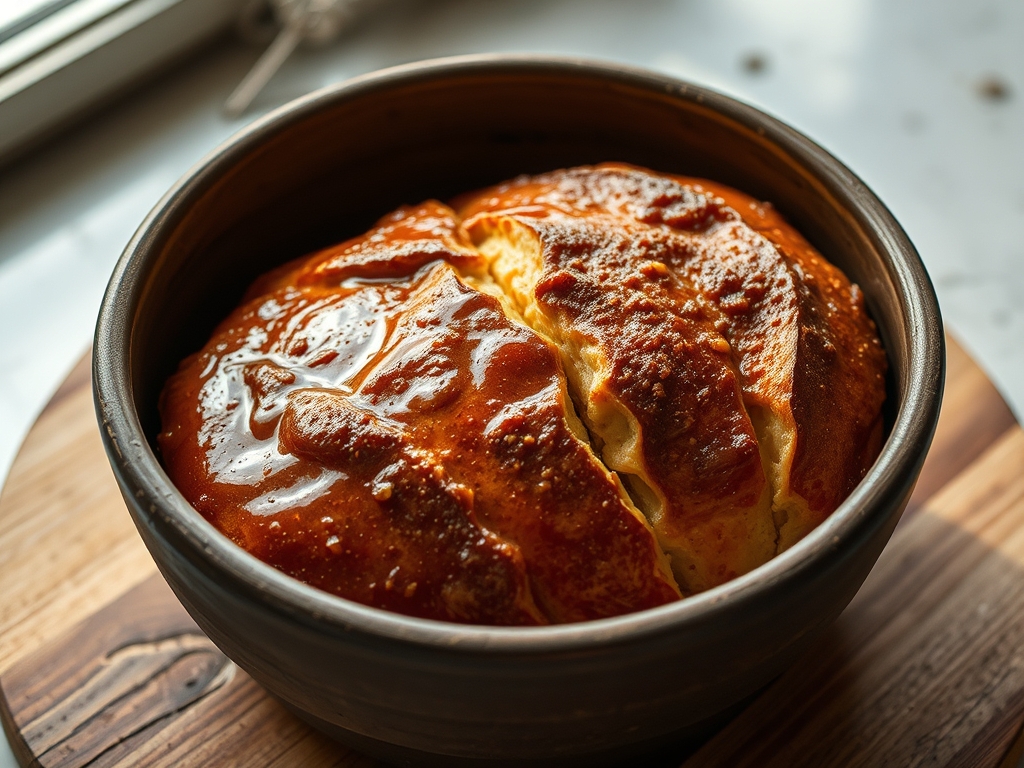
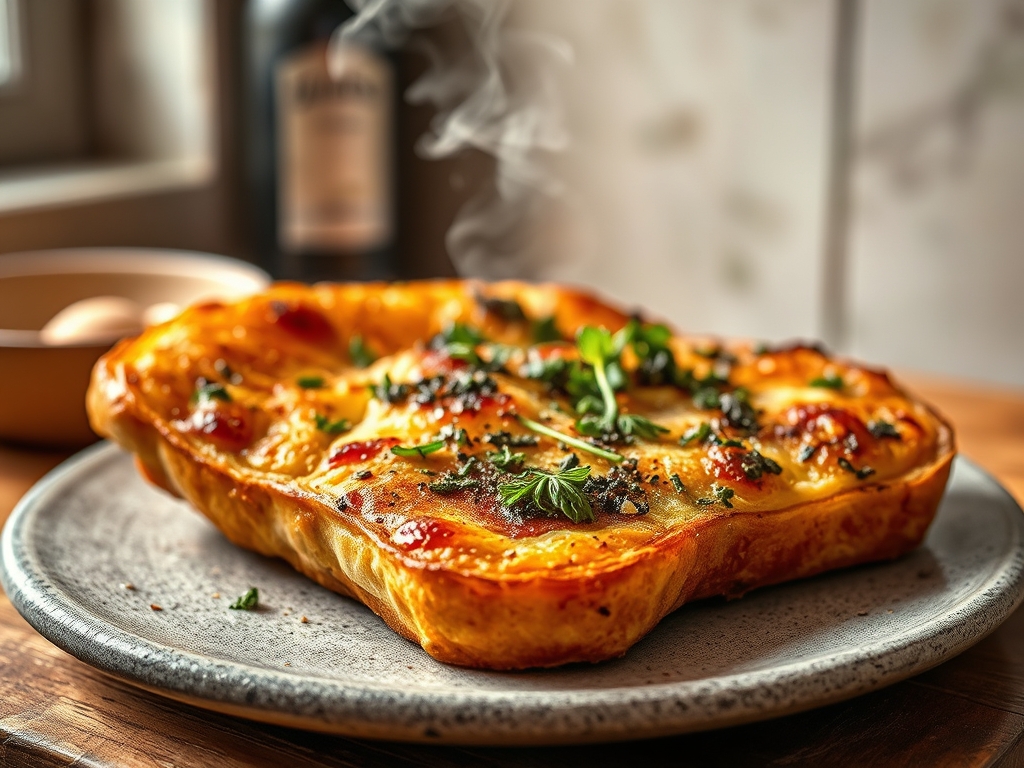
Listen to that sound. It is the tectonic shift of a shattering crust; the auditory proof of a successful starch retrogradation. When you approach a loaf of Italian Pane Rustico, you are not just looking at bread. You are inspecting a structural masterpiece of carbon dioxide traps and caramelized proteins. Most amateur attempts result in a tragic, spongy disappointment that lacks the structural integrity to support even a smear of butter. We are here to fix that. This is about the violent expansion of gases within a gluten matrix and the subsequent crystallization of semolina dust. We want a crust so jagged it threatens the roof of your mouth and an interior crumb so airy it defies gravity. This audit focuses on the precise hydration ratios and thermal shocks required to transform humble flour into an architectural marvel. If your kitchen does not currently smell like a toasted grain elevator, you have failed the first phase of the operation. Prepare for a total recalibration of your fermentation protocols.
THE DATA MATRIX
| Metric | Specification |
|---|---|
| Prep Time | 20 Minutes (Active) |
| Execution Time | 18 to 22 Hours (Fermentation Included) |
| Yield | 2 Large Boules |
| Complexity (1-10) | 7 |
| Estimated Cost per Serving | $0.45 |
THE GATHERS
Ingredient Protocol:
- 500g / 3.75 cups High-Protein Bread Flour (12.7% protein minimum)
- 100g / 0.75 cup Fine Semolina Flour (Durum wheat)
- 450ml / 1.9 cups Filtered Water (Heated to exactly 90 degrees F)
- 12g / 2 tsp Fine Sea Salt
- 3g / 1 tsp Active Dry Yeast
- Extra Semolina for dusting the bench scraper and proofing baskets
Section A: Ingredient Quality Audit:
The primary failure point in Italian Pane Rustico is the use of "All-Purpose" flour. AP flour lacks the tensile strength to maintain a high-volume alveoli structure during the long proofing stage. If your dough feels viscous and slack rather than elastic, your protein content is too low. Fix this by adding 15g of vital wheat gluten to the mix. Secondly, chlorinated tap water is a yeast assassin. It inhibits the enzymatic activity required to infuse the dough with complex sugars. Always use filtered water to ensure the yeast can aerate the dough to its maximum potential. Finally, if your yeast does not foam within five minutes of hydration, discard the batch. Stale yeast results in a dense, leaden brick that no amount of heat can salvage.
THE MASTERCLASS
Step-by-Step Execution:
1. The Autolyse Phase
Combine your flours and water in a large ceramic bowl until no dry spots remain. Cover and let sit for 40 minutes. This allows the flour to fully hydrate and initiates the enzymatic breakdown of starches without the interference of salt or yeast.
Pro Tip: Use a digital scale for this. Volumetric measurements are the enemy of consistency. The autolyse phase allows the gluten to begin forming spontaneously, which reduces the manual labor required to render a smooth dough later.
2. Inoculation and Bulk Fermentation
Sprinkle the yeast and salt over the hydrated mass. Use a "pincer" method to fold the ingredients into the dough. Perform four sets of "stretch and folds" every 30 minutes over the next two hours. This builds a vertical tension in the gluten strands.
Pro Tip: A bench scraper is your best friend here. It allows you to manipulate high-hydration doughs without adding excess flour, which would ruin the delicate hydration balance and result in a dull, heavy crumb.
3. The Cold Retardation
Place the dough in a sealed container and refrigerate for 12 to 18 hours. This slow fermentation is where the flavor profile develops as the yeast produces organic acids and CO2.
Pro Tip: Cold temperatures slow down the yeast but allow the bacteria to thrive. This creates the piquant tang associated with professional-grade Italian Pane Rustico. It also firms up the dough, making it easier to score.
4. Shaping and Final Proof
Turn the dough onto a surface dusted with semolina. Shape into a tight boule by pulling the edges toward the center. Place into a floured banneton or a bowl lined with a linen towel. Let it rise at room temperature for 90 minutes.
Pro Tip: Use the "finger poke test." If the dough springs back slowly and leaves a small indentation, it is ready. If it collapses, you have over-proofed; if it snaps back instantly, it needs more time to aerate.
5. The Thermal Shock
Preheat a Dutch oven inside your oven to 500 degrees F. Carefully drop the dough into the pot, score the top with a razor blade, and cover. Bake for 20 minutes covered, then reduce heat to 450 degrees F and bake for 20 minutes uncovered.
Pro Tip: The heavy lid traps steam, which keeps the surface of the loaf supple. This allows for maximum "oven spring" before the crust hardens. Without steam, the crust sets too early, resulting in a stunted, dense loaf.
Section B: Prep & Timing Fault-Lines:
The most common human error is rushing the cooling process. If you cut into the loaf while it is hot, the steam escapes prematurely, leaving you with a gummy, underdeveloped interior. The molecular structure requires at least one hour of cooling to set. Another fault-line is the "cold kitchen" syndrome. If your ambient temperature is below 68 degrees F, your bulk fermentation will stall. Use a proofing box or the "oven light" method to maintain a consistent 75 degrees F environment.
THE VISUAL SPECTRUM
Section C: Thermal & Visual Troubleshooting:
Look at the reference photo. Note the "ears" or the jagged ridges where the dough was scored. If your loaf is flat and lacks these ridges, your scoring was too shallow or your oven was not hot enough. The deep mahogany color is a result of the Maillard reaction. If your crust is pale and "dusty," you likely over-proofed the dough, and the yeast consumed all the surface sugars. Conversely, if the bottom is burnt while the top is perfect, place a baking sheet on the rack below your Dutch oven to deflect direct radiant heat. The semolina coating should look like golden crystals; if it looks like white powder, the oven humidity was too low.
THE DEEP DIVE
Macro Nutrition Profile
Each 100g serving contains approximately 240 calories, 8g of protein, 48g of carbohydrates, and 1g of fat. Because of the long fermentation, the glycemic index is lower than standard white bread, as the yeast has already "pre-digested" many of the simple sugars.
Dietary Swaps
- Vegan: This recipe is naturally vegan.
- Gluten-Free: This specific architecture relies on gluten. For a GF version, replace the flour with a high-quality 1-to-1 GF blend and add 10g of psyllium husk powder to mimic the elastic matrix.
- Keto: Impossible for a traditional Pane Rustico. Use almond flour and egg white protein powder, though the "crunch" will be fundamentally different.
Meal Prep & Reheating Science
To maintain the molecular structure, never refrigerate finished bread. This accelerates staling via starch recrystallization. Store at room temperature in a paper bag. To revive a day-old loaf, mist it with water and bake at 350 degrees F for 8 minutes to re-gelatinize the starches.
THE KITCHEN TABLE
Why is my crust soft after cooling?
This is usually caused by excess moisture trapped in the loaf. Try "curing" the bread by turning the oven off and leaving the loaf inside with the door cracked for 10 minutes after the bake is finished.
Can I use a baking stone instead?
Yes, but you must introduce steam manually. Place a saucier or cast-iron skillet on the bottom rack and pour in boiling water immediately after loading the dough to create the necessary humidity.
Why didn't my dough rise in the oven?
This is likely due to under-proofing or weak gluten. Ensure you are performing the "stretch and fold" maneuvers correctly to build the internal tension required to hold the expanding gases.
How do I get that piquant sourdough flavor without a starter?
The 18-hour cold retard in the refrigerator is the key. It allows for the development of acetic and lactic acids, which provide that complex, aged flavor profile without the maintenance of a sourdough mother.