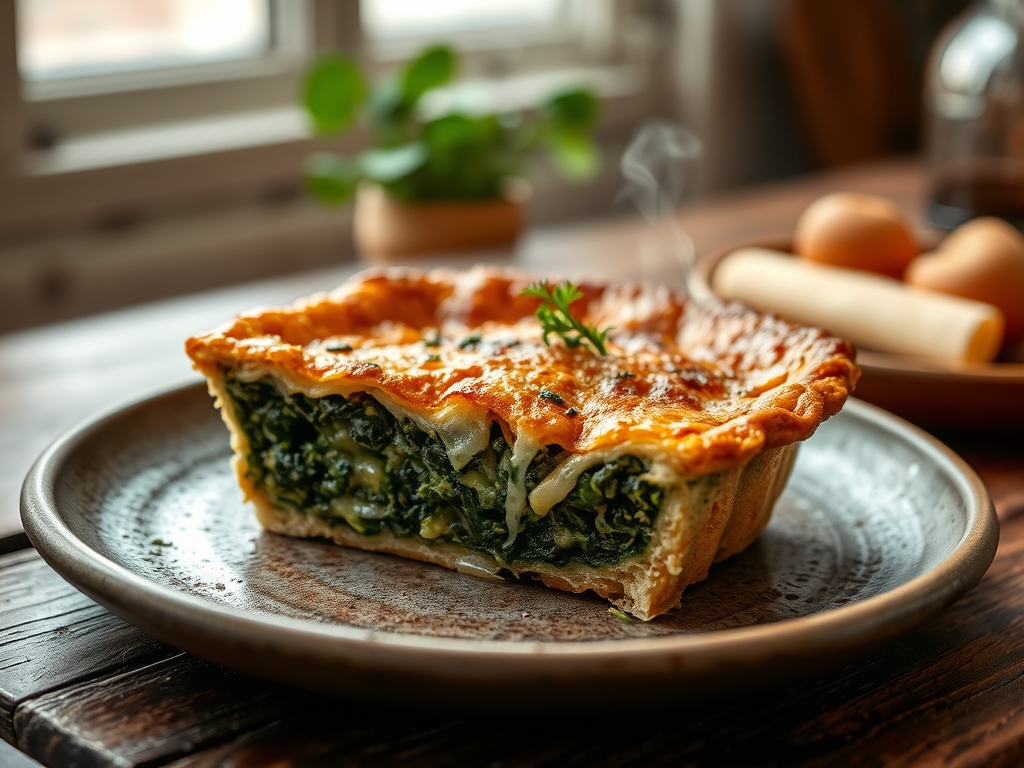
The kitchen is a battlefield of moisture management. When you commit to a Rustic Spinach Pie, you are not merely baking a savory pastry; you are conducting a high-stakes structural audit of leafy greens and laminated dough. Imagine the crunch of forty micro-layers of hand-folded filo shattering under your knife. The sound is sharp, percussive, and deeply satisfying. Beneath that golden, architectural canopy lies a core of vibrant emerald spinach, punctuated by the piquant tang of sheep's milk feta and the aromatic lift of fresh dill. The challenge is simple yet brutal: spinach is approximately ninety percent water. Without the correct infrastructure, that water will turn your crisp foundation into a soggy, structural failure. We are here to ensure that every bite maintains its integrity from the center to the crust. This is about thermal precision, moisture extraction, and the chemistry of fat. Prepare your station; we are moving from amateur assembly to professional culinary engineering.
THE DATA MATRIX
| Metric | Specification |
|---|---|
| Prep Time | 45 Minutes |
| Execution Time | 55 Minutes |
| Yield | 8 Substantial Wedges |
| Complexity (1-10) | 7 (Requires manual dexterity) |
| Estimated Cost per Serving | $2.75 |
THE GATHERS
Ingredient Protocol:
- 800g / 1.75 lbs Fresh Baby Spinach (Triple washed and dried)
- 450g / 1 lb High-Quality Filo Pastry (Thawed slowly in refrigeration)
- 350g / 12.5 oz Greek Feta Cheese (Firm, brined variety)
- 4 Large Organic Eggs (Room temperature)
- 250ml / 1 cup Extra Virgin Olive Oil (For brushing and sautéing)
- 120g / 4.2 oz Spring Onions (Finely minced)
- 30g / 1 oz Fresh Dill (Stems removed, finely chopped)
- 15g / 1 tbsp Fresh Mint (Bruised and minced)
- 5g / 1 tsp Freshly Grated Nutmeg
- Sea Salt and Cracked Black Pepper to taste
Section A: Ingredient Quality Audit:
The primary failure point in a Rustic Spinach Pie is the quality of the greens. If your spinach appears wilted or slimy, it has already begun the process of cellular breakdown; this releases excess moisture that no amount of cooking can fully mitigate. If you must use frozen spinach, you must thaw it completely and use a clean kitchen towel to wring out every possible drop of liquid until the mass is nearly dry to the touch. Furthermore, avoid "feta-style" cheeses made from cow's milk. These often have a higher moisture content and lack the structural stability of traditional sheep or goat milk feta. If your cheese feels too soft, crumble it and let it air-dry on a paper towel for twenty minutes before folding it into your mixture. Finally, ensure your olive oil is fresh. Rancid oil will oxidize under high heat, destroying the delicate aromatics of the herbs.
THE MASTERCLASS
1. The Moisture Extraction Protocol
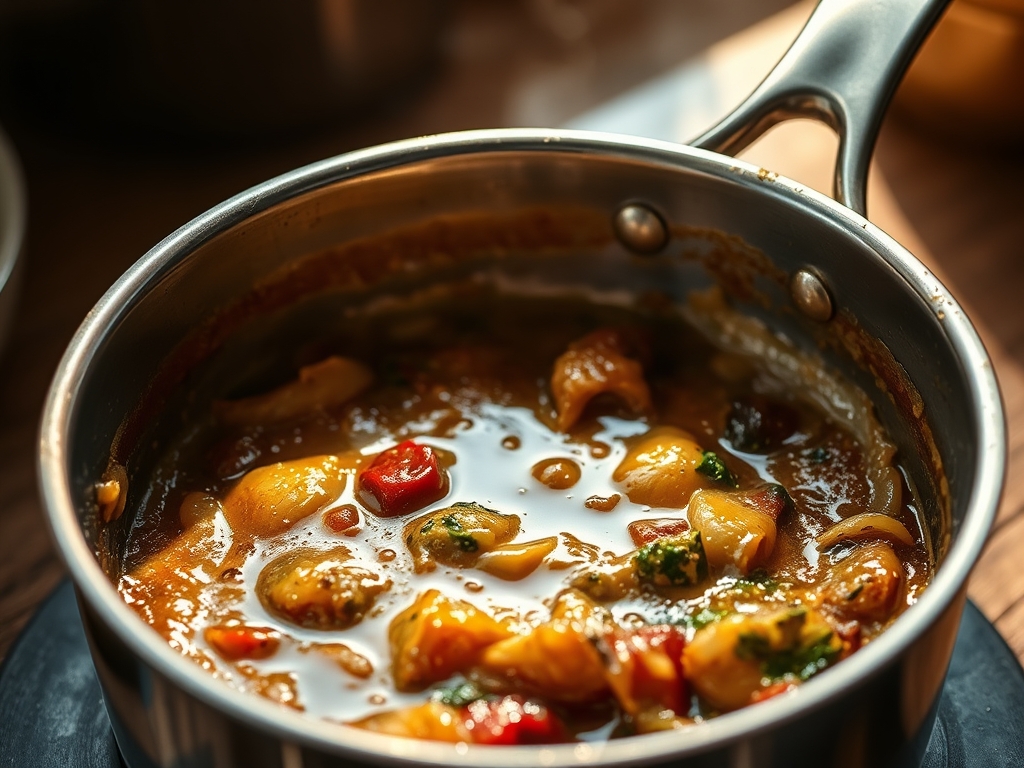
Begin by wilting your spinach in a large saucier or wide skillet over medium-high heat. Do not add water; the residual moisture on the leaves is sufficient. Once collapsed, transfer the greens to a colander. Use a bench scraper or the back of a heavy spoon to press the liquid out. This step is non-negotiable for structural integrity.
Pro Tip: This process involves rendering the cellular water out of the leaves. By removing this liquid early, you prevent the steam from hydrating the bottom layers of the filo, which would otherwise result in a "soggy bottom" syndrome.
2. The Aromatic Infusion
Wipe your skillet dry and add two tablespoons of olive oil. Sauté the spring onions until translucent but not browned. Stir in the dill, mint, and nutmeg for exactly sixty seconds to infuse the oil with their volatile compounds. Remove from heat and allow this mixture to cool to room temperature before combining with the spinach.
Pro Tip: Heat acts as a catalyst for essential oils. By briefly sautéing the herbs, you aerate the flavor profile, ensuring the piquant notes of the dill are distributed evenly throughout the dense spinach mass.
3. The Binding Matrix
In a large mixing bowl, lightly whisk the eggs using a digital scale to ensure they total approximately 200g. Crumble the feta into large chunks; do not over-mix. Fold in the cooled spinach and aromatic herb mixture. Season with pepper, but be cautious with salt, as the feta provides a significant sodium baseline.
Pro Tip: The eggs act as a protein binder. During the bake, they coagulate to create a stable internal matrix that holds the spinach in place, preventing the filling from leaking when the pie is sliced.
4. The Filo Architecture
Brush a heavy circular baking pan with olive oil. Lay down your first sheet of filo, allowing the edges to overhang. Brush lightly with oil. Repeat this for eight layers, rotating each sheet slightly to create a starburst pattern. This creates the "Rustic" aesthetic while providing a reinforced base.
Pro Tip: Use a high-quality pastry brush to ensure even distribution. The oil between the sheets creates a barrier that allows the layers to steam-separate, which is the secret to achieving a shattered-glass texture.
5. The Encasement and Bake
Spread the filling evenly over the filo base. Fold the overhanging edges back over the filling in a pleated, "hand-folded" fashion, leaving the center slightly exposed. Brush the top generously with oil and bake at 190C / 375F for 45 to 55 minutes until the crust is a deep, mahogany gold.
Pro Tip: For professional results, use a digital thermometer to check the center. You are looking for an internal temperature of 74C / 165F to ensure the egg binder has fully set without overcooking the delicate greens.
Section B: Prep & Timing Fault-Lines:
Timing is the silent killer of pastry. If you leave your filo uncovered for even five minutes, the thin sheets will dehydrate and become brittle, making them impossible to fold without shattering. Always keep your pastry under a damp (not soaking) cloth. Temperature control is equally vital. If you add hot filling to cold pastry, the temperature differential creates immediate condensation. This moisture is trapped between the layers, ruining the lamination before the pie even hits the oven. Always ensure your filling is at room temperature or cooler before assembly.
THE VISUAL SPECTRUM
Section C: Thermal & Visual Troubleshooting:
Referencing our Masterclass photo, the ideal Rustic Spinach Pie should exhibit a "bronzed armor" appearance. If your pie looks pale or "blonde" after forty minutes, your oven calibration may be off; increase the heat by ten degrees. If the edges are browning too quickly while the center remains soft, tent the edges with foil to protect the delicate pastry. A dull, matte finish on the crust indicates insufficient oiling. To achieve that professional sheen, ensure each layer is brushed to the very edge. If you see liquid pooling in the center, it means the spinach was not dried sufficiently. In future attempts, increase the pressing time during the extraction phase or add a tablespoon of breadcrumbs to the filling to absorb excess moisture.
THE DEEP DIVE
Macro Nutrition Profile:
A single wedge provides a balanced profile of complex carbohydrates, healthy fats from olive oil, and high-quality protein from eggs and feta. It is exceptionally high in Vitamin K, Vitamin A, and Manganese.
Dietary Swaps:
- Vegan: Replace feta with a firm, salted tofu crumble mixed with nutritional yeast and lemon juice. Use a flax-egg binder.
- Keto: Eliminate the filo and bake the filling in a buttered dish as a "crustless" spanakopita.
- GF: Use a gluten-free puff pastry or a specialized GF filo substitute, though the latter may require more oil to prevent cracking.
Meal Prep & Reheating Science:
To maintain the molecular structure of the crust, never use a microwave for reheating. The microwave agitates water molecules, which will migrate from the spinach into the crust, turning it rubbery. Instead, use an oven or air fryer at 175C / 350F for ten minutes. This re-crisps the fat in the filo and maintains the structural integrity of the layers.
THE KITCHEN TABLE
Why is my spinach pie watery at the bottom?
This is usually caused by inadequate moisture extraction from the raw spinach. You must squeeze the wilted greens until they are nearly dry. Additionally, ensure the filling is cool before placing it on the pastry to avoid condensation.
Can I use puff pastry instead of filo?
Yes, but it changes the dish from a Rustic Spinach Pie to a turnover style. Puff pastry is much heavier and contains more butter; you will need to adjust your baking time and expect a much richer, less crisp result.
How do I prevent the filo from cracking?
Keep the filo covered with a damp towel at all times. Work quickly and brush each layer thoroughly with oil. If it does crack, do not panic; the rustic style is forgiving and small tears can be easily overlapped.
What is the best way to store leftovers?
Store in an airtight container in the refrigerator for up to three days. For the best texture, place a paper towel in the container to absorb any residual moisture that might migrate from the filling to the crust during cooling.