Stop treating your vegetables like a soft-boiled afterthought. If your current broccoli output resembles a soggy, pale-green heap of sadness, you are failing the basic tenets of culinary infrastructure. We are here to conduct a rigorous Charred Broccoli Audit; a systematic overhaul of your roasting protocol designed to transform fibrous brassicas into blackened, crispy masterpieces. We are chasing the dragon of the Maillard reaction. We want floret tips that shatter like glass and stalks that maintain a structural "snap" while surrendering to a buttery, tender interior. This is not just cooking; it is thermal engineering. We are looking for high-velocity heat, precise lipid distribution, and a total rejection of moisture-trapping crowded pans. When the oven door opens, the aroma should be a complex blend of nutty brassica and pungent garlic, signaling a successful carbonization event. Strap in and calibrate your digital scales. We are moving from amateur steaming to professional-grade searing, ensuring every floret meets the gold standard of texture and flavor.
THE DATA MATRIX
| Metric | Specification |
|---|---|
| Prep Time | 12 Minutes |
| Execution Time | 20 Minutes |
| Yield | 4 Servings |
| Complexity (1-10) | 3 |
| Estimated Cost per Serving | $1.25 USD |
THE GATHERS
Ingredient Protocol:
- Fresh Broccoli Crowns: 680g / 1.5 lbs (stems attached for structural integrity).
- Extra Virgin Olive Oil: 60ml / 0.25 cup (high-quality lipid for heat conduction).
- Kosher Salt: 10g / 2 tsp (diamond crystal preferred for surface area coverage).
- Red Pepper Flakes: 2g / 0.5 tsp (to infuse the oil with heat).
- Fresh Garlic Cloves: 4 units (microplaned to create a viscous paste).
- Lemon Juice: 15ml / 1 tbsp (to deglaze the palate post-roast).
- Parmesan Reggiano: 30g / 0.25 cup (finely grated for umami reinforcement).
Section A: Ingredient Quality Audit:
Sub-par raw materials are the primary cause of systemic failure. If your broccoli feels "rubbery" before you even begin, it has lost its turgor pressure. To fix this, submerge the stalks in an ice-water bath for fifteen minutes to rehydrate the cellular walls. If your garlic has sprouted a green "germ," discard it; that bitter sprout will ruin the piquant profile of the dish. Finally, ensure your olive oil is not rancid. Roasting at high temperatures amplifies off-flavors. If the oil smells like old crayons, your audit is over before it starts. Use a fresh, peppery oil to ensure the best results.
THE MASTERCLASS
1. The Architectural Breakdown
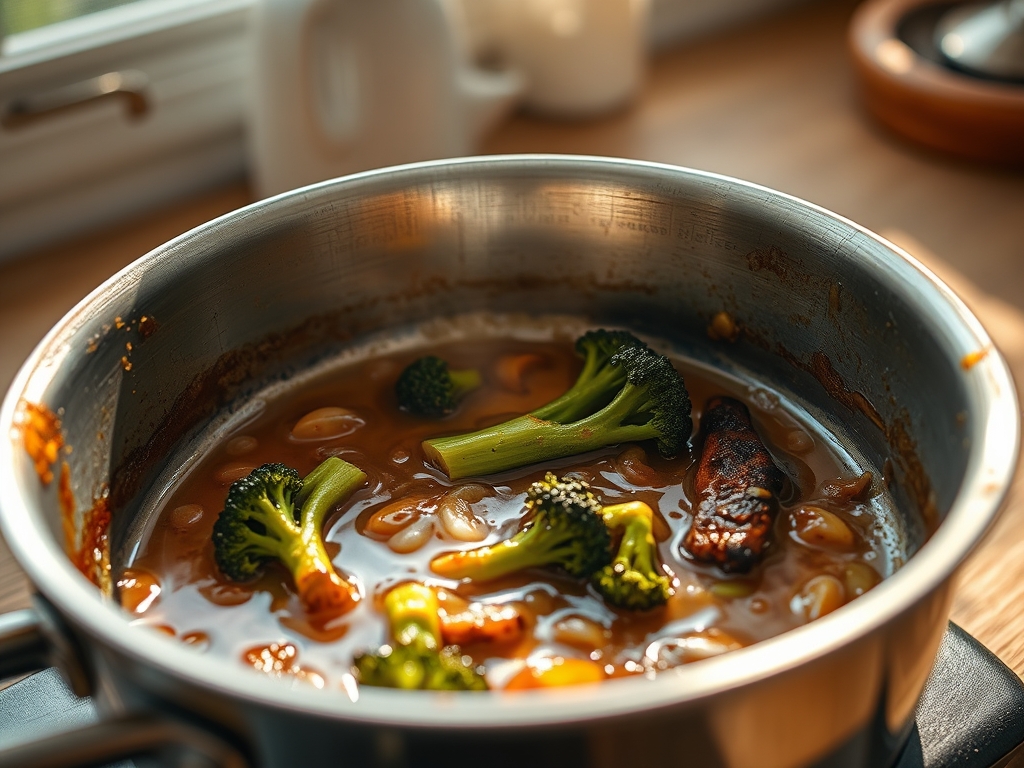
Begin by breaking the crowns into uniform florets. Use a sharp chef knife to slice through the thick stems, ensuring each piece has at least one flat surface. This flat surface is your primary heat-exchange interface.
Pro Tip: Use a digital scale to ensure all florets are within a 5g variance. Uniformity in mass ensures that the thermal energy penetrates every piece at the same rate, preventing a mix of burnt and raw stalks.
2. The Lipid Emulsification
In a large stainless steel bowl, combine the oil, salt, pepper flakes, and microplaned garlic. Whisk vigorously to aerate the mixture and ensure the garlic is suspended evenly in the oil. Toss the broccoli in this mixture until every crevice of the floret is coated.
Pro Tip: Use a silicone spatula to scrape the sides of the bowl. You want every milligram of that garlic-infused oil on the vegetables, not left behind on the plastic.
3. The Thermal Deployment
Preheat your oven to 230C / 450F. Place a heavy-duty rimmed baking sheet inside while it preheats. Once the target temperature is reached, pull the tray and dump the broccoli onto it. You should hear an immediate sizzle.
Pro Tip: The preheated tray acts like a cast-iron skillet, immediately beginning to render the moisture out of the surface cells. This jumpstarts the browning process before the interior becomes overcooked.
4. The Carbonization Phase
Roast for 15 to 20 minutes. Do not open the oven door every three minutes; you are venting your thermal energy. At the halfway mark, use a bench scraper or metal spatula to aggressively flip the florets.
Pro Tip: We are looking for "floret tip carbonization." This is the point where the very edges of the broccoli turn black. This is not "burnt" in the traditional sense; it is a concentrated bitter-sweet flavor profile that balances the sulfurous notes of the vegetable.
5. The Acidic Finish
Remove the tray from the oven and immediately zest the lemon over the hot broccoli. Squeeze the juice over the pan to deglaze any caramelized bits stuck to the metal. Toss with the grated Parmesan.
Pro Tip: Transfer the finished product to a saucier or a warm serving bowl immediately. Leaving the broccoli on the hot sheet pan for too long will lead to "carry-over cooking," which can turn your crisp florets into mush.
Section B: Prep & Timing Fault-Lines:
The most common failure in this Charred Broccoli Audit is "Pan Overcrowding." If the florets are touching, they will steam instead of sear. The moisture escaping the vegetable creates a humid micro-climate that prevents the temperature from rising above 100C / 212F. To fix this, use two pans or roast in batches. Another fault-line is the "Cold Tray Error." If you put cold vegetables on a cold tray in a hot oven, the energy is wasted heating the metal rather than the food. Always preheat your steel.
THE VISUAL SPECTRUM
Section C: Thermal & Visual Troubleshooting:
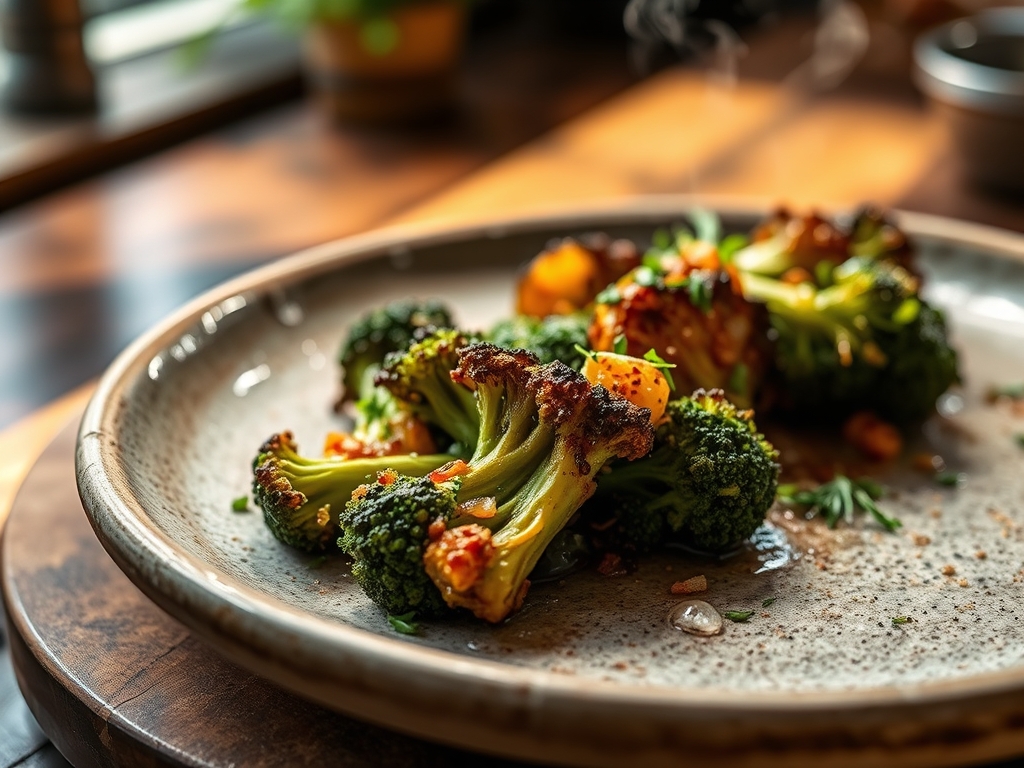
Referencing our Masterclass photo, notice the deep, mahogany-to-black edges on the floret tips. If your broccoli looks pale and "wet," your oven temperature is likely calibrated incorrectly. Use an oven thermometer to verify the internal heat. If the stalks are dark but the tips are still bright green, you have likely used too much oil, which is frying the bottom but insulating the top. The goal is a matte finish on the char with a slight sheen from the emulsified oil. If the cheese looks clumpy rather than integrated, you added it too late; it needs the residual heat of the 230C tray to melt into the "nooks and crannies" of the florets.
THE DEEP DIVE
Macro Nutrition Profile:
A standard serving of this charred broccoli provides approximately 120 calories, 9g of healthy fats, 4g of protein, and 6g of fiber. It is a micronutrient powerhouse, loaded with Vitamin C, Vitamin K, and folate. The high heat does degrade some Vitamin C, but the increased bioavailability of other antioxidants like sulforaphane compensates for the loss.
Dietary Swaps:
- Vegan: Replace Parmesan with nutritional yeast or a toasted panko-and-lemon-zest mixture for crunch.
- Keto: This recipe is naturally keto-compliant. Increase the olive oil or add crumbled bacon for additional fat macros.
- Gluten-Free: Naturally GF, provided your spices are not processed in a facility with wheat.
Meal Prep & Reheating Science:
To maintain the molecular structure during reheating, avoid the microwave. The microwave excites water molecules, which will steam the broccoli from the inside out, resulting in a limp texture. Instead, use an air fryer at 200C / 400F for three minutes. This re-crisps the exterior lipids and restores the carbonized tips to their original structural integrity.
THE KITCHEN TABLE
Why is my broccoli bitter instead of sweet?
You likely over-charred the garlic. Garlic burns faster than broccoli. If this happens, try adding the garlic halfway through the roasting process or slicing it into larger "chips" that can withstand the high heat without carbonizing completely.
Can I use frozen broccoli for this audit?
It is not recommended. Frozen broccoli has compromised cell walls due to ice crystal formation. When thawed and roasted at high heat, it releases too much moisture, making the desired "shatter-crisp" texture nearly impossible to achieve.
What is the best tray for roasting?
Use a heavy-gauge aluminum half-sheet pan. Thin, non-stick pans can warp at 230C and do not hold enough thermal mass to create a proper sear. The reflective surface of aluminum also helps prevent the bottoms from burning too quickly.
My broccoli is charred but the stalks are tough.
This indicates the florets were too large. The exterior finished before the heat could penetrate the dense stalk. Next time, slice the stalks thinner or peel the woody outer layer of the stem with a vegetable peeler before roasting.