Stop treating your brassicas like a side dish and start treating them like a structural engineering project. We are moving beyond the soggy, sulfurous mush of the past and entering the realm of the Roasted Cauliflower Crust. This is not just a gluten-free alternative; it is a masterclass in moisture management and Maillard reaction optimization. When you subject a cruciferous head to the violent heat of a calibrated oven, you are not just cooking; you are performing a thermal extraction of water to concentrate sugars and sulfur compounds into a savory, golden matrix. The goal is a surface area so crisp it shatters, yet a core that remains tender and structurally sound. We are looking for that specific shade of mahogany that signals the total transformation of raw vegetable matter into a gourmet foundation. If you are still using frozen florets and a dull knife, stand down. We are here to audit your process, refine your technique, and ensure your kitchen infrastructure can handle the high-heat demands of a truly elite crust.
THE DATA MATRIX
| Metric | Specification |
|---|---|
| Prep Time | 25 Minutes |
| Execution Time | 40 Minutes |
| Yield | 2 Standard Crusts |
| Complexity | 7/10 |
| Estimated Cost per Serving | $1.85 |
THE GATHERS
Ingredient Protocol:
- 700g / 1 Large Head of Cauliflower (Riced)
- 125g / 1.25 Cups Finely Grated Parmesan Cheese
- 1 Large Egg (Approx. 50ml)
- 5g / 1 tsp Fine Sea Salt
- 2g / 0.5 tsp Dried Oregano
- 1g / 0.25 tsp Freshly Cracked Black Pepper
- 15ml / 1 tbsp Extra Virgin Olive Oil
Section A: Ingredient Quality Audit:
The primary failure point in a Roasted Cauliflower Crust is moisture. If your cauliflower feels heavy and dense, it is holding too much water. Technical fix: Pulse the florets in a food processor until they resemble fine grains, then microwave the mass for five minutes to aerate and release steam before the final squeeze. If your cheese is the pre-shredded variety coated in cellulose, your crust will fail to bond. Use high-quality, aged Parmesan to ensure the proteins render and act as a biological glue. If your egg is too small, the structural integrity will collapse; always use a digital scale to ensure your binder-to-mass ratio is precise.
THE MASTERCLASS
Step-by-Step Execution:
1. The Desiccation Protocol
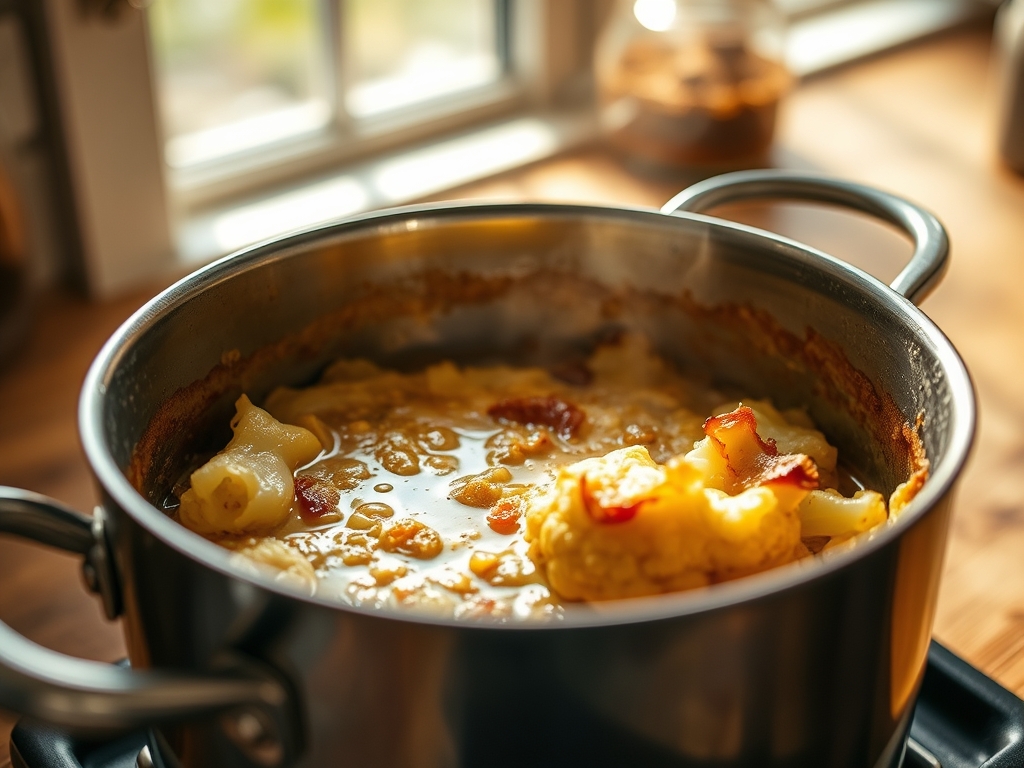
After ricing the cauliflower, you must extract every milliliter of excess fluid. Place the steamed cauliflower in a clean lint-free kitchen towel and twist with maximum torque.
Pro Tip: Use a bench scraper to gather every grain from your workstation into the towel. The science here is simple: water is the enemy of the Maillard reaction. By removing moisture, you allow the surface temperature to exceed 100 degrees Celsius, triggering browning rather than steaming.
2. The Molecular Binding
In a large stainless steel mixing bowl, combine the desiccated cauliflower with the beaten egg, cheese, and spices. Fold the mixture until it becomes a cohesive, viscous dough.
Pro Tip: Use a digital scale to weigh your final cauliflower mass after squeezing. You want a 5:1 ratio of cauliflower to cheese for optimal rigidity. This ensures the proteins in the cheese and egg cross-link effectively during the thermal phase.
3. Structural Molding
Transfer the dough onto a sheet of parchment paper. Use your palms to flatten it into a circle approximately 6mm thick. Ensure the edges are slightly thicker to prevent premature carbonization.
Pro Tip: A tapered rolling pin can help achieve a uniform thickness, which is critical for even heat distribution. If the center is thicker than the edges, you will end up with a soggy middle and burnt perimeter.
4. The Thermal Strike
Slide the parchment onto a preheated baking stone or heavy-duty baking sheet in an oven set to 220 degrees Celsius (425 degrees Fahrenheit). Bake until the surface is deep gold and the edges are crisp.
Pro Tip: High-quality half-sheet pans made of heavy-gauge aluminum are essential here. They provide the thermal mass necessary to infuse the bottom of the crust with immediate heat, ensuring it sets before the egg proteins can leak.
Section B: Prep & Timing Fault-Lines:
Timing is the difference between a gourmet vessel and a vegetable pancake. If you pull the crust too early, the center will lack the tensile strength to hold toppings. If you wait too long, the sulfur compounds in the cauliflower will become piquant and overly pungent. Use an infrared thermometer to check your oven stone; it should be at least 215 degrees Celsius before the crust makes contact. If your kitchen is cold, your dough may become too stiff to spread; work quickly to maintain the elasticity provided by the ambient temperature of the steamed cauliflower.
THE VISUAL SPECTRUM
Section C: Thermal & Visual Troubleshooting:
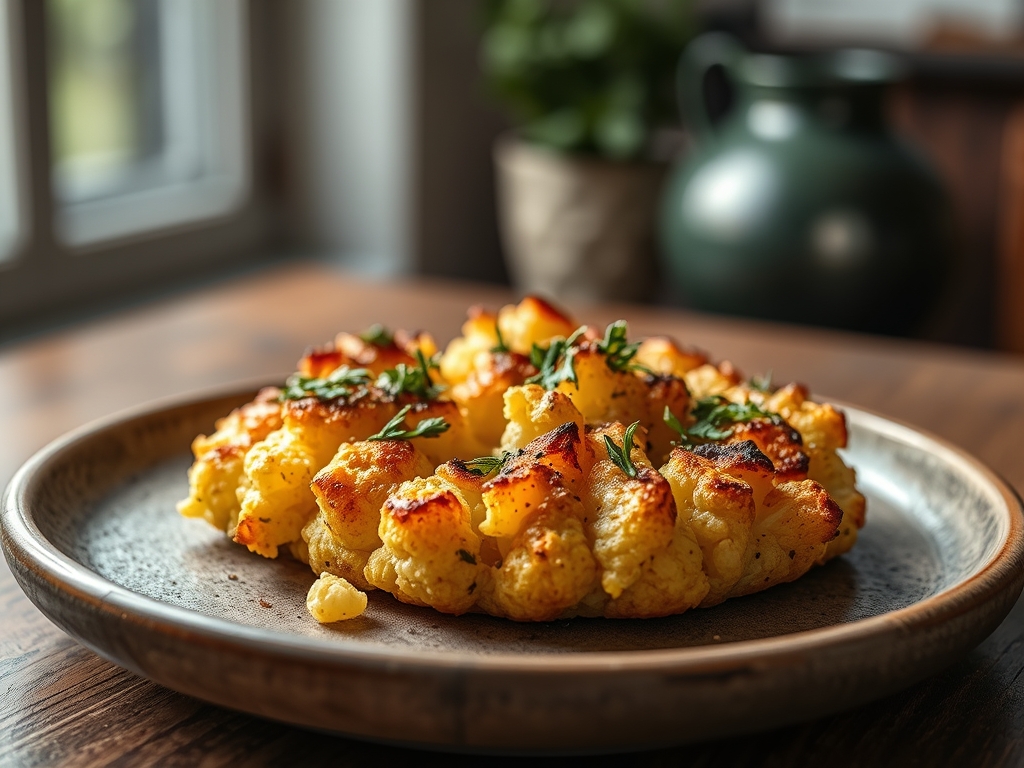
Referencing our Masterclass photo, notice the "leopard spotting" on the surface. This is the gold standard. If your crust is a uniform, pale yellow, you have failed to reach the required temperature for caramelization. If the edges are black while the center is white, your oven has hot spots or your crust thickness is inconsistent. A dull, matte finish indicates a lack of fat; a quick brush of olive oil before baking can help deglaze the surface sugars and create a vibrant, glossy sheen. If the crust appears "weepy" or wet, your desiccation protocol was insufficient.
THE DEEP DIVE
Macro Nutrition Profile:
A standard serving (1/4 of the crust) provides approximately 120 calories, 9g of protein, 6g of carbohydrates, and 7g of fat. This represents a significant reduction in glycemic load compared to traditional flour-based matrices.
Dietary Swaps:
For a Vegan iteration, replace the egg with a "flax egg" (15ml ground flax mixed with 45ml water) and use a nutritional yeast-based vegan parmesan. For Keto purists, increase the cheese ratio slightly to boost healthy fats. This recipe is inherently Gluten-Free, making it the ultimate tool for inclusive catering.
Meal Prep & Reheating Science:
To maintain molecular structure, do not microwave leftovers. The microwave excites water molecules, turning your crisp crust back into mush. Instead, use a dry skillet over medium heat to re-crisp the bottom, or a toaster oven at 175 degrees Celsius to restore the internal heat without compromising the structural integrity.
THE KITCHEN TABLE
Why is my crust sticking to the parchment?
You likely skipped the oil or used low-quality paper. Always use silicone-treated parchment. If it sticks, let it cool for two minutes; the proteins will contract and release naturally from the surface as they stabilize.
Can I use frozen cauliflower rice?
Yes, but the moisture content is significantly higher. You must double-down on the desiccation phase. Thaw it completely in a colander before attempting the towel-squeeze method to avoid a structural blowout during the bake.
How do I get the edges crispier?
Brush the outer 2cm of the crust with a light coating of olive oil or clarified butter before it enters the oven. This facilitates better heat transfer and encourages the Maillard reaction to accelerate at the perimeter.
My crust is falling apart when I pick it up. Why?
This is a binding failure. Either your cauliflower was too wet, preventing the egg from "grabbing" the fibers, or you didn't use enough cheese. Ensure your cauliflower is bone-dry before mixing to guarantee a solid bond.