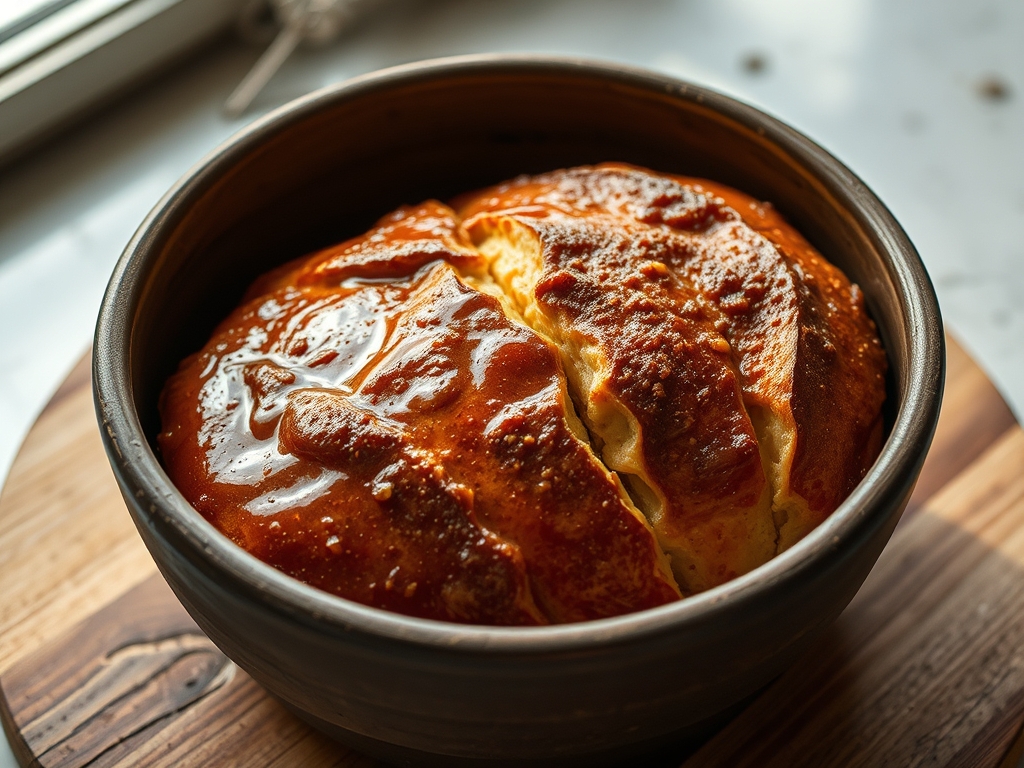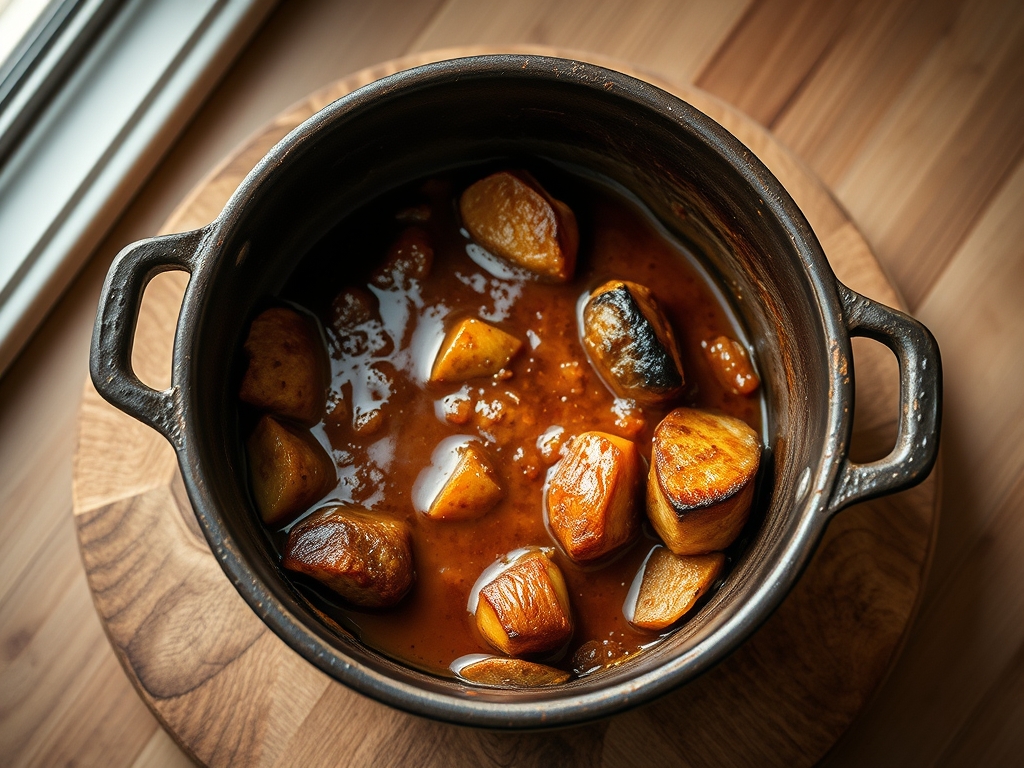
Listen up, flavor architects. We are moving beyond the realm of soggy bottoms and timid fruit slices. When we discuss the architecture of a Rustic Pear Tart, we are not just baking a dessert; we are engineering a structural masterpiece of fiber density and lipid saturation. Imagine the scent of caramelized sugars colliding with the musk of ripening Anjou pears. The crust must possess enough structural integrity to support the heavy, moisture-rich fruit without collapsing into a weeping mess. We want a golden, shattered-glass texture on the edges and a tender, butter-soaked foundation. This is about the physics of the bake. We are harnessing the natural pectin of the fruit to create a viscous glaze that binds the tart together as it cools. If you are tired of lackluster pastries that lack the piquant bite of a professional kitchen, you have come to the right place. We are going to render fat into flour and infuse every bite with technical precision. Prepare to audit your pantry and upgrade your execution. This is the infrastructure of the perfect pear.
THE DATA MATRIX
| Metric | Specification |
|---|---|
| Prep Time | 45 Minutes |
| Execution Time | 55 Minutes |
| Yield | 8 Servings |
| Complexity (1-10) | 6 |
| Estimated Cost per Serving | $1.75 |
THE GATHERS
Ingredient Protocol:
For the Infrastructure (Crust):
- 315g / 2.5 cups All-Purpose Flour (Unbleached)
- 225g / 1 cup Unsalted Butter (High-fat, chilled at 4 degrees Celsius)
- 15g / 1 tbsp Granulated Sugar
- 5g / 1 tsp Fine Sea Salt
- 120ml / 0.5 cup Ice Water (Filtered)
For the Pome Matrix (Filling):
- 4 Large Pears (Bosc or Anjou, firm-ripe)
- 50g / 0.25 cup Light Brown Sugar
- 15g / 1 tbsp Cornstarch (For moisture sequestration)
- 5ml / 1 tsp Pure Vanilla Extract
- 2g / 0.5 tsp Ground Cinnamon
- 30g / 2 tbsp Apricot Preserves (For the final glaze)
Section A: Ingredient Quality Audit:
The primary failure point in a Rustic Pear Tart is the water content of the fruit. If your pears are overripe, they will release excessive juice and turn your crust into a swamp. To fix this, look for pears that yield slightly to pressure at the neck but remain firm in the body. If your butter has a low milk-fat percentage (under 82 percent), the crust will lack the necessary flakiness. The fix is to use European-style butter which provides a higher lipid-to-water ratio. If your flour is too high in protein (like bread flour), the tart will be tough rather than crisp. Always use a digital scale to ensure your measurements are precise; volume measurements are the enemy of consistency.
THE MASTERCLASS
Step 1: Lipid Integration and Aeration
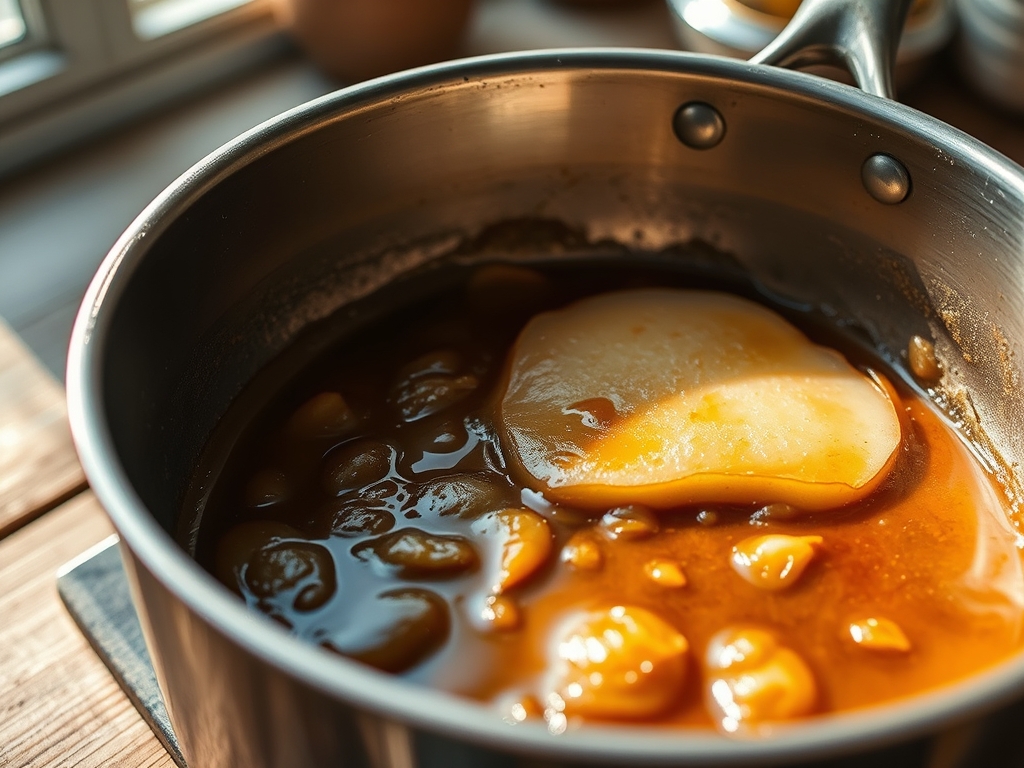
Begin by combining your dry ingredients in a chilled stainless steel bowl. Use a bench scraper to cut the cold butter into the flour until the pieces are the size of small peas. Do not overwork the dough; you want visible streaks of fat. Add the ice water one tablespoon at a time, tossing with a fork until the dough just holds together when squeezed.
Pro Tip: Keeping the butter cold is essential to create steam pockets during the bake. This process allows the dough to aerate, resulting in those coveted flaky layers. Using a digital scale ensures you don't over-hydrate the flour.
Step 2: Structural Lamination and Chilling
Turn the shaggy dough onto a clean surface and use your bench scraper to fold it over itself three times. This creates "pseudo-layers" that mimic professional puff pastry. Wrap the dough tightly in plastic and refrigerate for at least 60 minutes.
Pro Tip: Chilling allows the gluten to relax and the flour to fully hydrate. If you skip this, the crust will shrink in the oven and lose its geometric integrity.
Step 3: Pome Fiber Calibration
While the dough rests, peel and core your pears. Slice them into 5mm thick crescents. In a large bowl, toss the slices with brown sugar, cinnamon, and cornstarch. The cornstarch acts as a thickener to render the pear juices into a syrupy consistency rather than a watery runoff.
Pro Tip: Use a mandoline for perfectly uniform slices. Consistency in thickness ensures that every piece of fruit reaches the same level of caramelization at the same time.
Step 4: Assembly and The Rustic Fold
Roll the dough out on parchment paper to a 12-inch circle. Arrange the pear slices in a concentric pattern, leaving a two-inch border. Fold the edges of the dough over the pears, pleating as you go to create a rugged, circular wall.
Pro Tip: Dust the bottom of the dough with a thin layer of almond flour or crushed crackers before adding the fruit. This acts as a moisture barrier to prevent the dreaded soggy bottom.
Step 5: Thermal Execution
Brush the crust with an egg wash and sprinkle with coarse sugar. Slide the tart onto a preheated baking stone or heavy-duty baking sheet. Bake at 200 degrees Celsius (400 degrees Fahrenheit) for 45 to 55 minutes until the crust is deeply bronzed.
Pro Tip: High initial heat is required to set the crust structure before the butter can melt out. Use an infrared thermometer to ensure your baking stone has reached the target temperature.
Section B: Prep & Timing Fault-Lines:
The most common timing error is pulling the tart too early. If the pears have not bubbled in the center, the starches have not activated, and the filling will be runny. If your kitchen is over 22 degrees Celsius, your dough will become too soft to handle. If this happens, return the dough to the freezer for ten minutes to reset the lipids. Never dress your pears more than ten minutes before baking; the sugar will draw out too much moisture through osmosis, flooding your prep station.
THE VISUAL SPECTRUM
Section C: Thermal & Visual Troubleshooting:
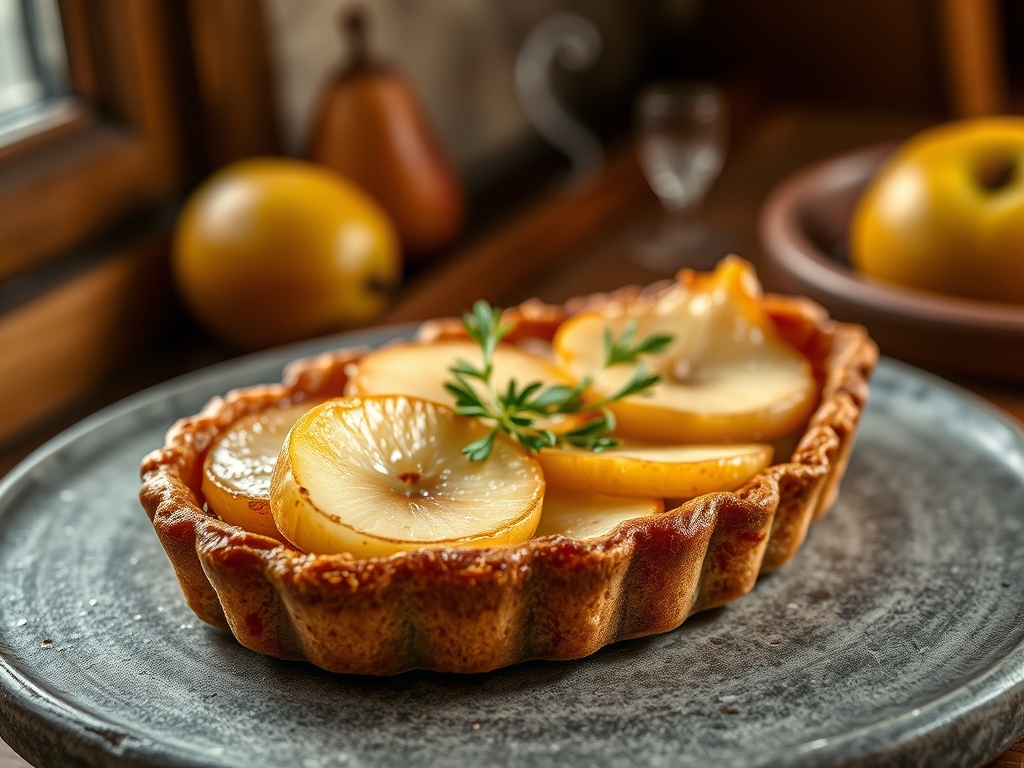
Referencing the Masterclass photo, your Rustic Pear Tart should exhibit a "Tiger-Crust" effect; a mix of deep mahogany and golden amber. If your tart looks pale and anemic, your oven temperature is likely calibrated too low. If the edges are burning while the center is raw, tent the edges with foil and lower the rack. Dull fruit is a sign of dehydration. To fix this, heat your apricot preserves in a small saucier until viscous and brush them over the warm fruit immediately after baking. This provides a professional "mirror glaze" and prevents the fruit from oxidizing and turning gray.
THE DEEP DIVE
Macro Nutrition Profile:
A single serving provides approximately 320 calories, 18g of fat, 38g of carbohydrates, and 4g of fiber. The high fiber content from the pear skins (if left on) and the fruit pulp provides a lower glycemic impact than a traditional berry pie.
Dietary Swaps:
- Vegan: Replace butter with a high-quality plant-based block (ensure it has a high melting point) and use an apricot glaze instead of an egg wash.
- Gluten-Free: Utilize a 1-to-1 GF flour blend containing xanthan gum to maintain structural elasticity.
- Keto: This is difficult due to the pear's natural sugars, but a crust made of almond flour and erythritol can lower the net carb count significantly.
Meal Prep & Reheating Science:
To maintain the molecular structure of the crust, never reheat in a microwave. The electromagnetic waves agitate water molecules, turning the crust rubbery. Instead, use a convection oven at 150 degrees Celsius for 10 minutes to re-crisp the lipid layers.
THE KITCHEN TABLE
Why is my tart leaking juice everywhere?
Your pears were likely overripe or you missed the cornstarch. Overripe fruit has broken-down cell walls that cannot hold liquid. Always use firm-ripe fruit and a starch binder to keep the juices viscous and contained within the crust.
Can I use apples instead of pears?
Yes, but apples have less moisture and higher pectin. You may need to add a splash of cider or lemon juice to infuse the filling with enough moisture to prevent the tart from becoming overly dry during the long bake.
My dough keeps cracking when I roll it. Help!
The dough is too cold or too dry. Let it sit at room temperature for five minutes. If it still cracks, your hydration was off during the initial mix. Next time, use a digital scale for the water.
How do I get that shiny professional look?
The secret is the "Nappage." Melt apricot jam in a saucier with a teaspoon of water. Strain out the chunks and brush the hot liquid over the tart the moment it exits the oven for a brilliant finish.