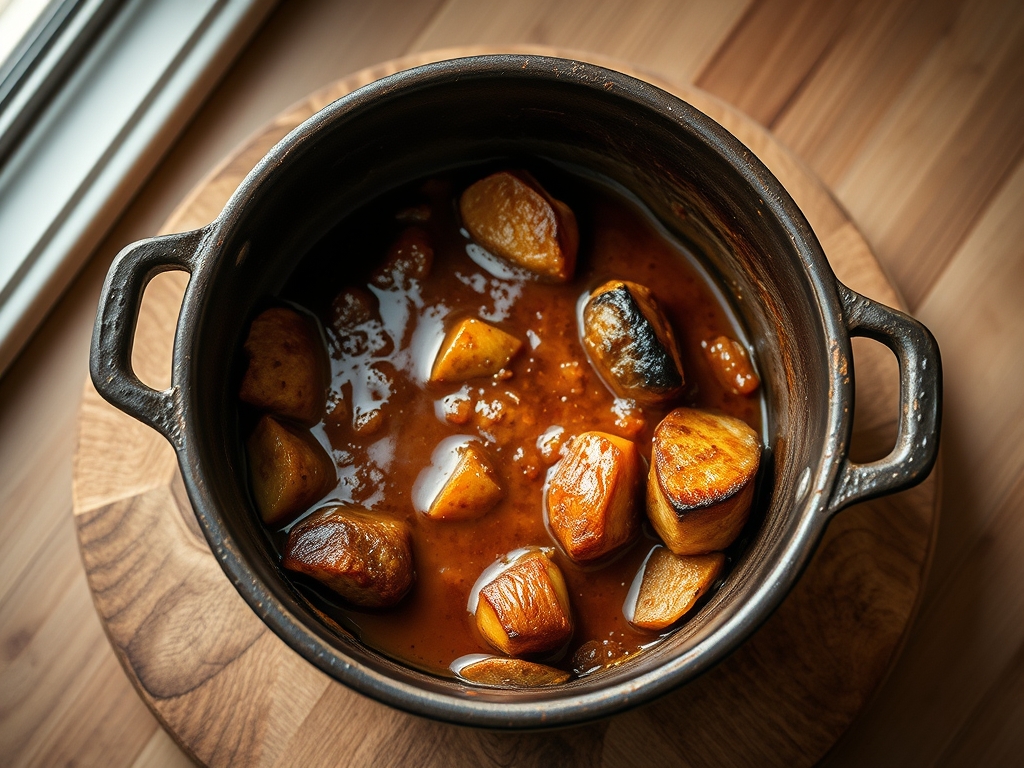
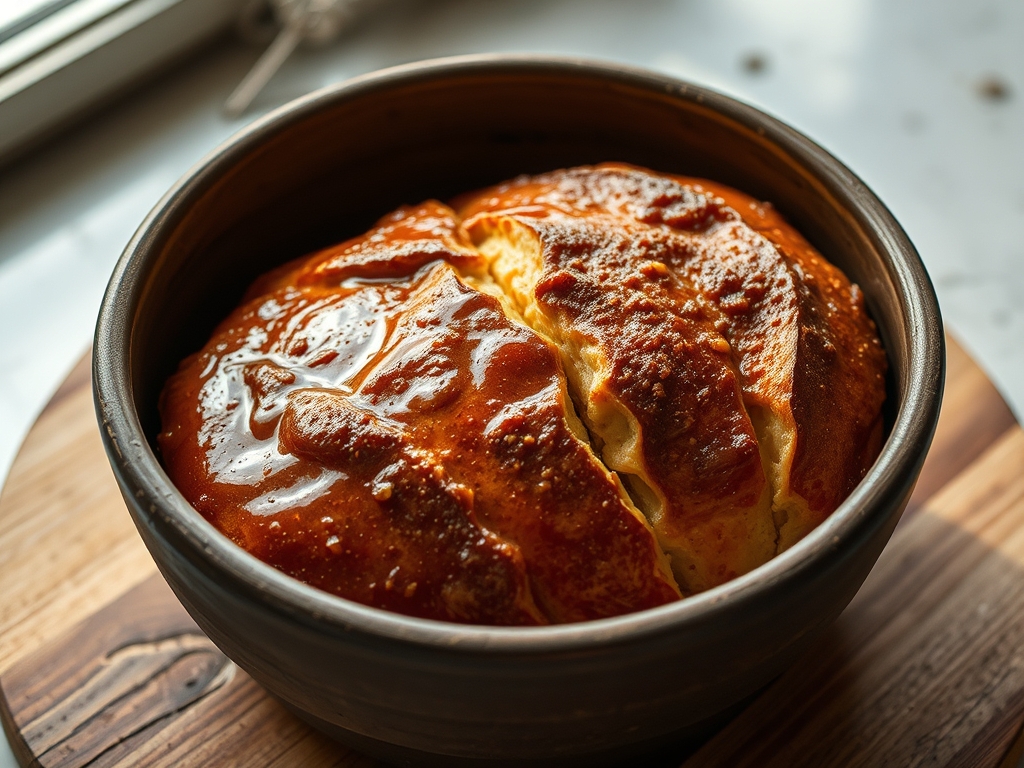
Listen to the sound of a cooling masterpiece. It is the "shatter-singing" of a crust under immense thermal stress. This is not just bread; it is an architectural marvel of tension and gas. When you approach a Rustic Sourdough Loaf, you are not merely looking for food. You are looking for that specific, mahogany-dark exterior that promises a glass-like crunch before yielding to a crumb so soft it feels like a cloud caught in a web. We are talking about high-hydration engineering where water and flour engage in a high-stakes dance of molecular bonding. The aroma is a complex profile of lactic acid tang and toasted cereal notes that hit the back of your throat with a piquant sharpness. This is the infrastructure of flavor. If your current loaf feels more like a dense brick than a structural triumph, your hydration ratios are failing you. We are here to audit your process, recalibrate your fermentation, and ensure your kitchen produces nothing less than a rustic titan.
THE DATA MATRIX
| Metric | Specification |
|---|---|
| Prep Time | 45 Minutes (Active) |
| Execution Time | 24 – 36 Hours (Total) |
| Yield | 1 Large Boule |
| Complexity | 8 / 10 |
| Estimated Cost per Serving | $0.45 |
THE GATHERS
Ingredient Protocol:
- 500g / 3.8 cups Strong Bread Flour (12.5% protein minimum)
- 375g / 1.5 cups Filtered Water (Room temperature)
- 100g / 0.5 cups Active Sourdough Starter (Fed 4-6 hours prior)
- 11g / 2 tsp Fine Sea Salt
- 5g / 1 tsp Rice Flour (For dusting the proofing basket)
Section A: Ingredient Quality Audit:
The most common failure point in a Rustic Sourdough Loaf is "weak" flour. If your flour lacks a high protein content, it cannot support the viscous weight of a 75% hydration dough. The result is a puddle instead of a loaf. If your dough feels slack, perform a "Windowpane Test" early. If it tears, your gluten network is failing. Fix this by adding a "stretch and fold" cycle every 30 minutes to manually align those protein strands. Furthermore, if your water is heavily chlorinated, it will stall your yeast. Use filtered water to ensure the microbial colony remains aggressive and ready to aerate the crumb.
THE MASTERCLASS
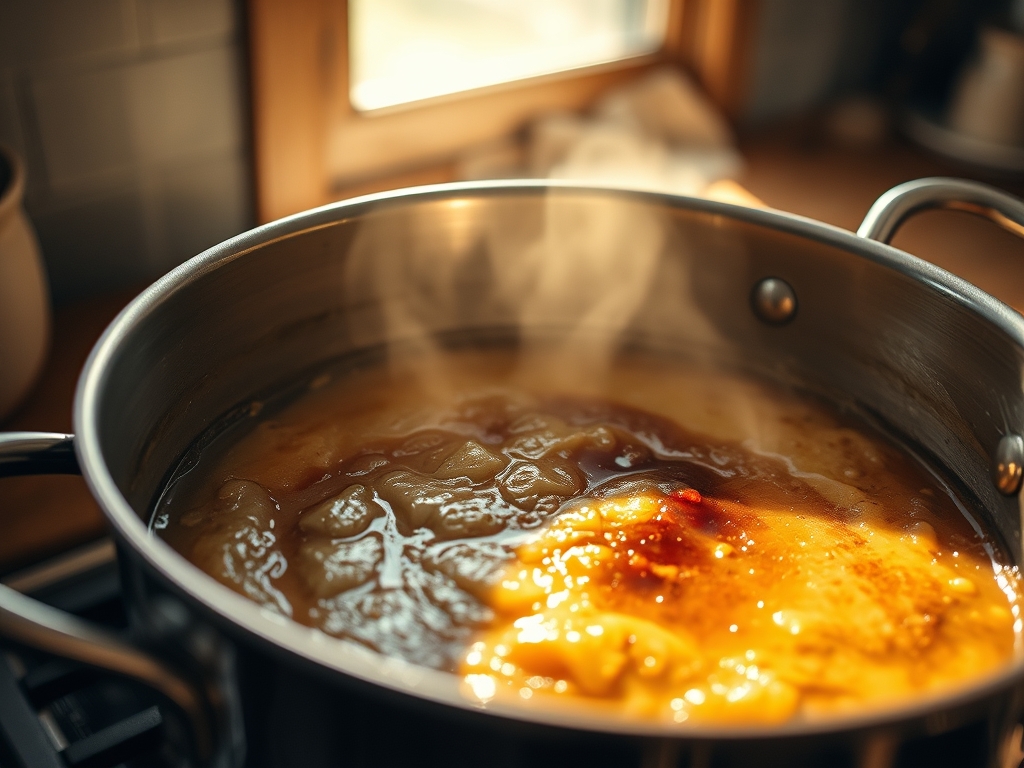
1. The Autolyse Phase
Combine your bread flour and water in a large ceramic bowl until no dry spots remain. Let this sit for one hour. This allows the flour to fully hydrate and enzymes to begin breaking down starches into simple sugars.
Pro Tip: Use a digital scale for this. Volumetric measurements are the enemy of consistency. The science here is enzymatic; by allowing the flour to hydrate without salt or yeast, you jumpstart gluten development without the tightening effects of sodium.
2. Inoculation and Salt Integration
Dimple your active starter and salt into the dough. Use a "pincer method" to squeeze the ingredients together until the dough is homogenous. The dough will feel slippery at first but will quickly tighten.
Pro Tip: Keep a small bowl of water nearby to dip your bench scraper and hands. Wet tools prevent the dough from sticking, allowing you to maintain the integrity of the dough mass without adding excess flour that would throw off your hydration ratios.
3. Bulk Fermentation and Structural Folds
Over the next 4 hours, perform four sets of "stretch and folds." Grab the edge of the dough, pull it upward until you feel resistance, and fold it over the center. Rotate the bowl and repeat four times per set.
Pro Tip: This is where you build "tensile strength." Each fold aligns the gluten molecules into a cohesive web. Watch for the dough to become viscous and hold its shape; this is the physical manifestation of gas being trapped within the protein matrix.
4. The Pre-Shape and Bench Rest
Gently turn the dough onto a clean surface. Use your bench scraper to tension the dough into a loose ball. Let it rest uncovered for 30 minutes. A skin will form, which helps the final shaping phase.
Pro Tip: Surface tension is the secret to "oven spring." If the dough spreads too thin during this rest, it lacks structural integrity. Use the scraper to tuck the edges under, creating a taut outer membrane that will eventually become that iconic crust.
5. Final Shaping and Cold Retard
Flip the dough and fold the sides into the center like an envelope. Roll it toward you to create a tight cylinder. Place it seam-side up in a banneton dusted with rice flour. Cover and refrigerate for 12 to 24 hours.
Pro Tip: Cold fermentation is where the "piquant" flavor develops. Bacteria produce acetic acid at lower temperatures, giving you that signature sourdough tang. The cold also firms the dough, making it easier to score with a lame or sharp razor.
6. The Thermal Blast
Preheat a Dutch oven at 500F (260C) for one hour. Invert the dough onto parchment, score a deep "C" shape, and drop it into the pot. Bake covered for 20 minutes, then uncovered for 25 minutes at 450F (230C).
Pro Tip: The covered pot creates a micro-steam environment. Steam keeps the surface supple, allowing the loaf to expand fully before the crust sets. This leads to the massive "ear" and open crumb seen in professional artisanal loaves.
Section B: Prep & Timing Fault-Lines:
Timing is the most volatile variable. If your kitchen is cold (below 68F), your bulk fermentation might take 8 hours instead of 4. Conversely, in a humid 80F kitchen, the dough can over-proof in 2 hours, resulting in a collapsed, flat loaf. Always watch the dough, not the clock. Look for a 50% increase in volume and the presence of small "fermentation bubbles" on the surface. If you miss the window and the dough becomes "soupy," bake it in a loaf pan to save the meal; it will still taste great even if the infrastructure failed.
THE VISUAL SPECTRUM
Section C: Thermal & Visual Troubleshooting:
Examine the Masterclass photo. Note the "blisters" on the crust; these are the result of long cold-fermentation and high hydration. If your loaf is dull and matte, you likely didn't have enough steam in the oven. If the bottom is burnt while the top is pale, place a cookie sheet on the rack below your Dutch oven to deflect direct heat. The "ear" or the raised flap of crust is achieved by scoring at a 45-degree angle. If your score disappears, the dough was likely over-proofed and lost its ability to expand rapidly when hitting the heat.
THE DEEP DIVE
Macro Nutrition Profile:
A single slice (approx. 50g) provides roughly 130 calories, 4g of protein, 25g of carbohydrates, and less than 1g of fat. Sourdough has a lower glycemic index than commercial bread because the long fermentation process breaks down many of the starches and neutralizes phytic acid, making minerals more bioavailable.
Dietary Swaps:
- Vegan: Naturally vegan.
- Gluten-Free: Requires a specialized GF starter and a blend of sorghum, millet, and psyllium husk to mimic gluten tension.
- Keto: Not possible with traditional flour; requires almond flour and vital wheat gluten, though it will lack the authentic sourdough crumb.
Meal Prep & Reheating Science:
To maintain the molecular structure, never refrigerate baked bread; this accelerates staling through starch retrogradation. Store at room temperature in a paper bag for 48 hours. To revive, spray the loaf lightly with water and bake at 350F for 10 minutes. This re-hydrates the starches and restores the "shatter-singing" crust.
THE KITCHEN TABLE
Why is my sourdough starter not bubbling?
Your starter likely needs more warmth or a more consistent feeding schedule. Ensure you are using unbleached flour and filtered water. If it is cold, place the jar near a pilot light or on top of the refrigerator to stimulate activity.
Can I bake this without a Dutch oven?
Yes, but you must create artificial steam. Place a heavy cast-iron skillet on the bottom rack and pour one cup of boiling water into it the moment you slide your bread onto a baking stone. This mimics the sealed environment.
How do I get a more open crumb?
Increase your hydration slightly and handle the dough with extreme care during the shaping phase. Every time you "punch down" the dough, you collapse the delicate gas pockets you spent hours building. Be gentle; treat it like a balloon.
Why does my bread stick to the proofing basket?
Use rice flour. Unlike wheat flour, rice flour does not contain gluten and will not bond with the wet dough. It acts like tiny ball bearings, allowing the loaf to slide out perfectly every single time without tearing the skin.